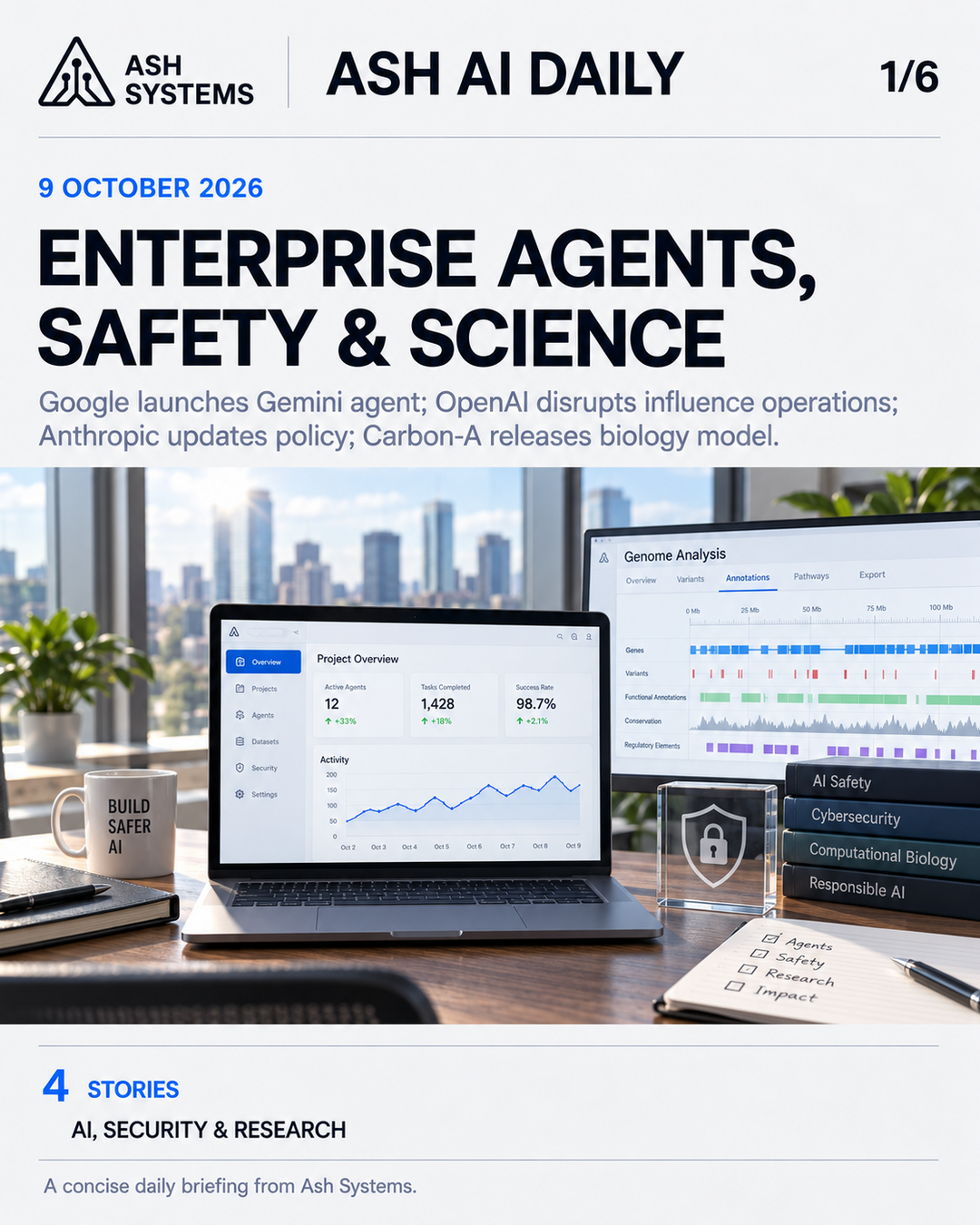
Issue 64Published October 9, 2026
Editor noteThis archived Ash AI Daily issue retains the delivered editorial briefing and final cards.
 Ash SystemsAI NewsletterDaily Issue
Google pushes enterprise agents into a governed work surface, while new safety, policy and research signals sharpen the practical limits of AI deployment.
This archived Ash AI Daily issue retains the delivered editorial briefing and final cards.
Each story keeps its image, summary, impact, and linked sources in one uninterrupted reading flow.
This archived Ash AI Daily issue retains the delivered editorial briefing and final cards.
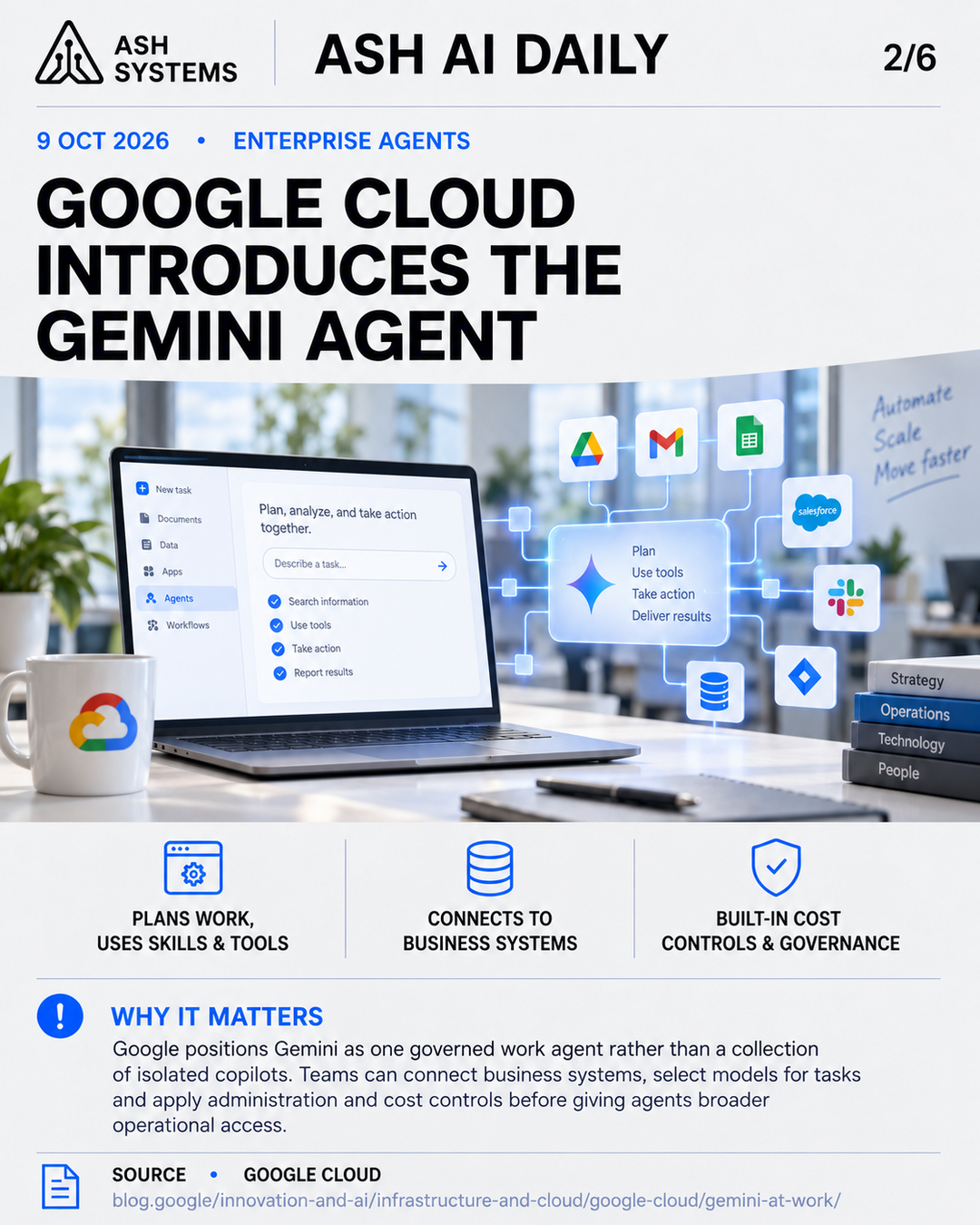
Google Cloud announced Gemini agent, a universal agent for work. Google says it can plan work, use skills and tools, connect to customers’ business systems, and return completed work inside existing documents, inboxes and developer environments.
This frames enterprise-agent deployment as a governed operating layer rather than a collection of isolated copilots. The stated model selection, cost controls and administration features matter for teams that need to connect agents to real systems without losing oversight.
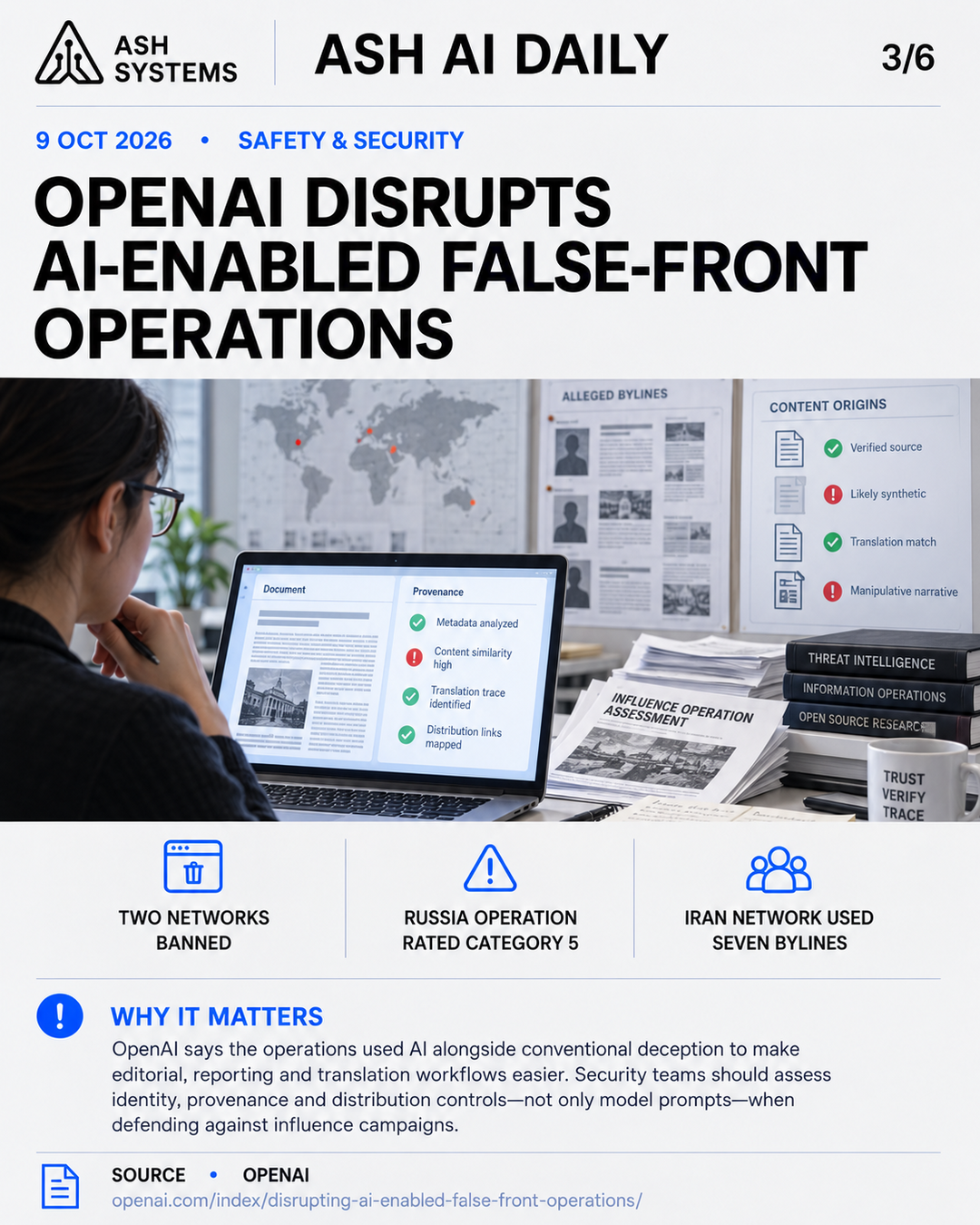
OpenAI reported banning two influence-operation networks—one originating in Russia and one in Iran—that used its models alongside conventional tactics. It assessed the Russia-origin operation at Category 5 on the Breakout Scale and said the Iranian operation used seven journalist personas.
The report is a practical reminder that AI changes the efficiency of influence workflows, not just the content they produce. Defenses need to test identity, provenance, editorial controls and distribution paths alongside model-level safeguards.
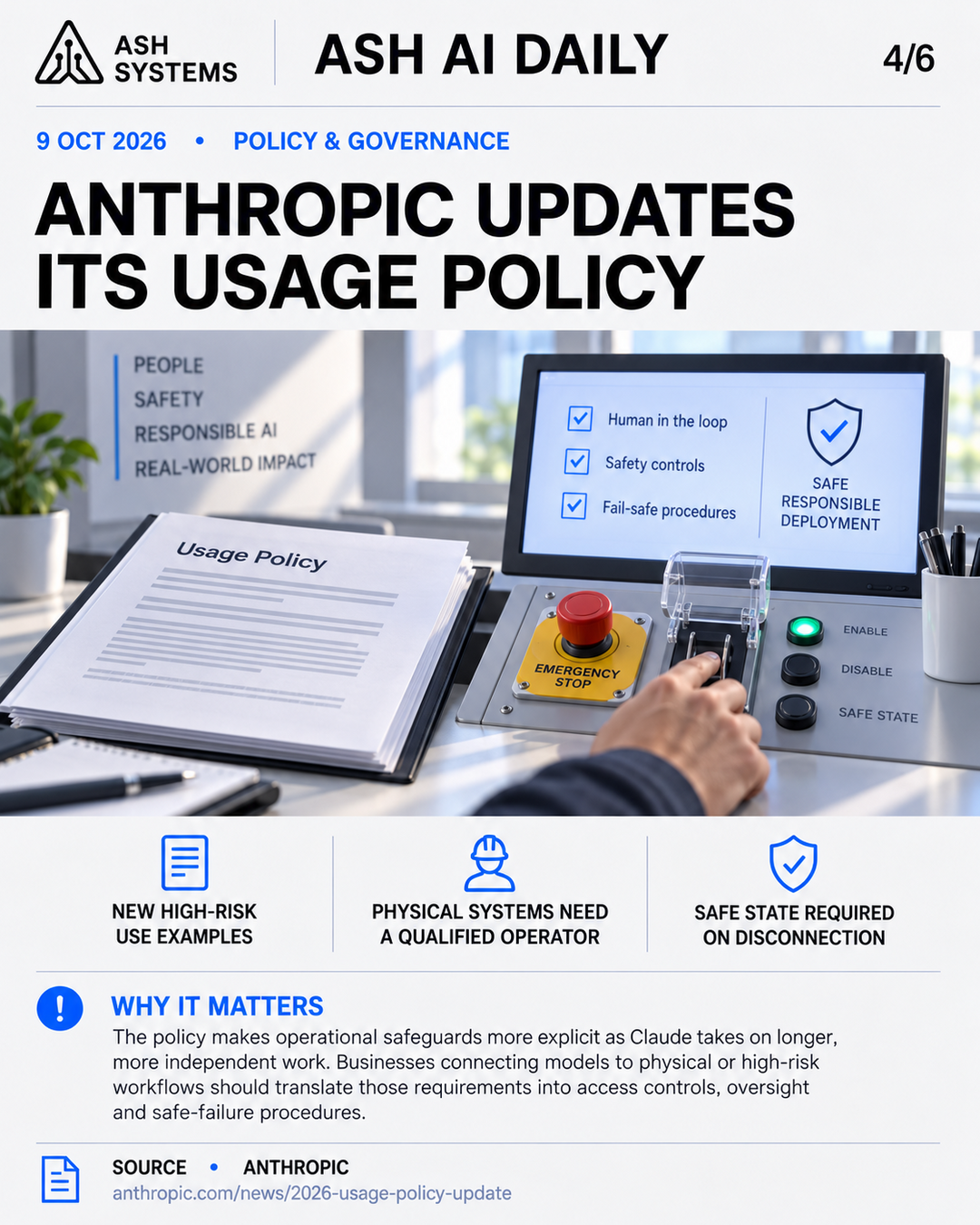
Anthropic published a 2026 Usage Policy update that adds examples for high-risk uses and requirements for models connected to autonomous physical equipment. It says a qualified operator must be able to observe and stop the equipment, and the system must enter a safe state if Claude is disconnected.
Model policies are becoming more operational as agents move from assistance toward independent work. Organizations applying models in high-risk or physical workflows should translate policy requirements into technical access controls, human oversight and tested safe-failure procedures.
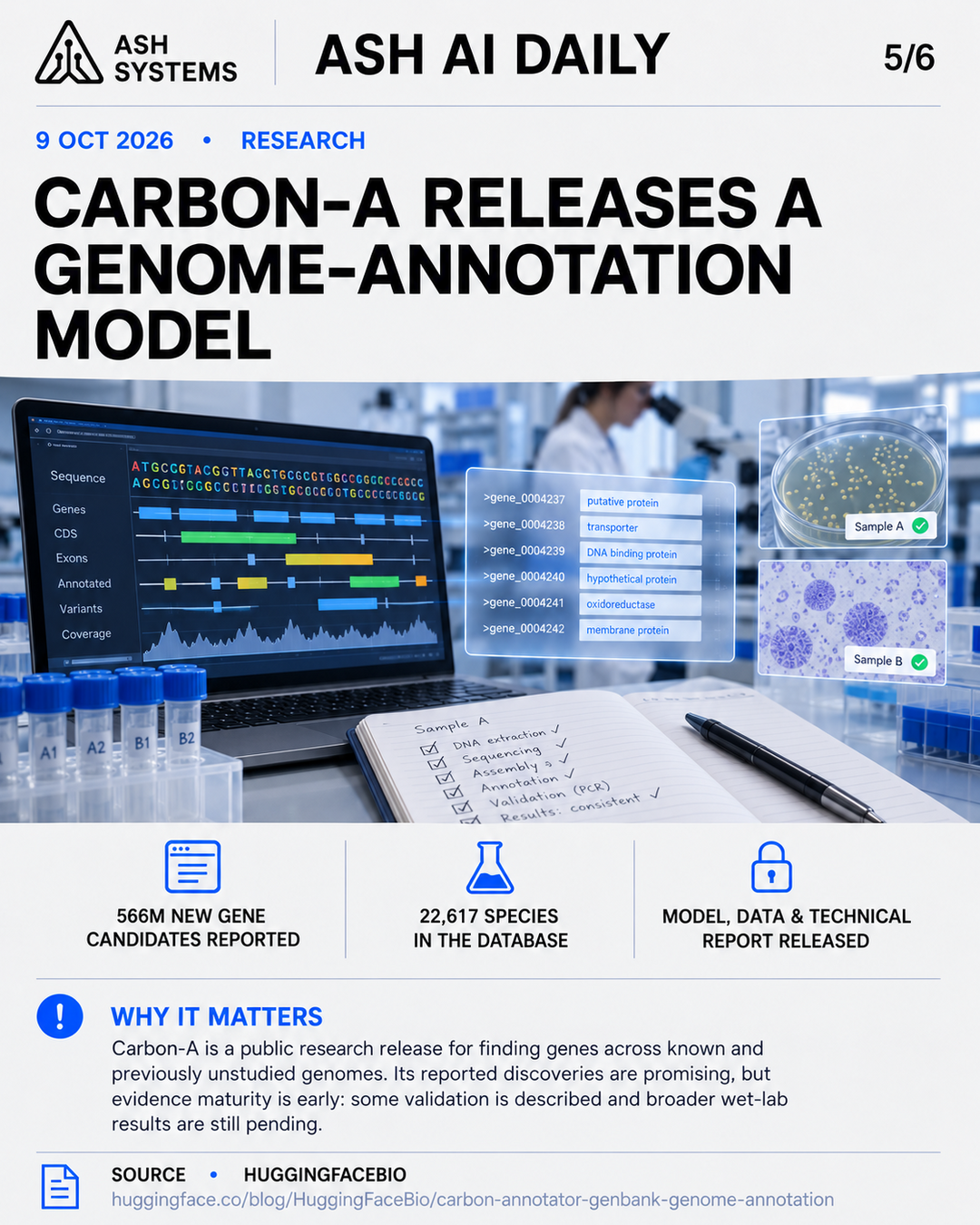
HuggingFaceBio released Carbon-A, its model, training data, technical report and an annotation database covering 22,617 species. The team reports 566 million new gene candidates and says some candidates were validated in well-studied species; broader wet-lab results are still pending.
This is an early research release, not a deployed biological conclusion. Its potential value is the combination of open model, data and technical artifact for genome annotation, while the reported discoveries still require continued experimental validation.
This issue includes a closing visual to carry the next-day watchlist or wrap-up prompt alongside the main briefing.
Join the source-linked daily briefing and confirm once before delivery begins.
Ash AI Daily

A concise, source-linked read on the AI news that changes what teams can build.
You will receive a confirmation email before any daily issue is sent.