
Issue 54Published September 29, 2026
Editor noteThis archived Ash AI Daily issue retains the delivered editorial briefing and final cards.
 Ash SystemsAI NewsletterDaily Issue
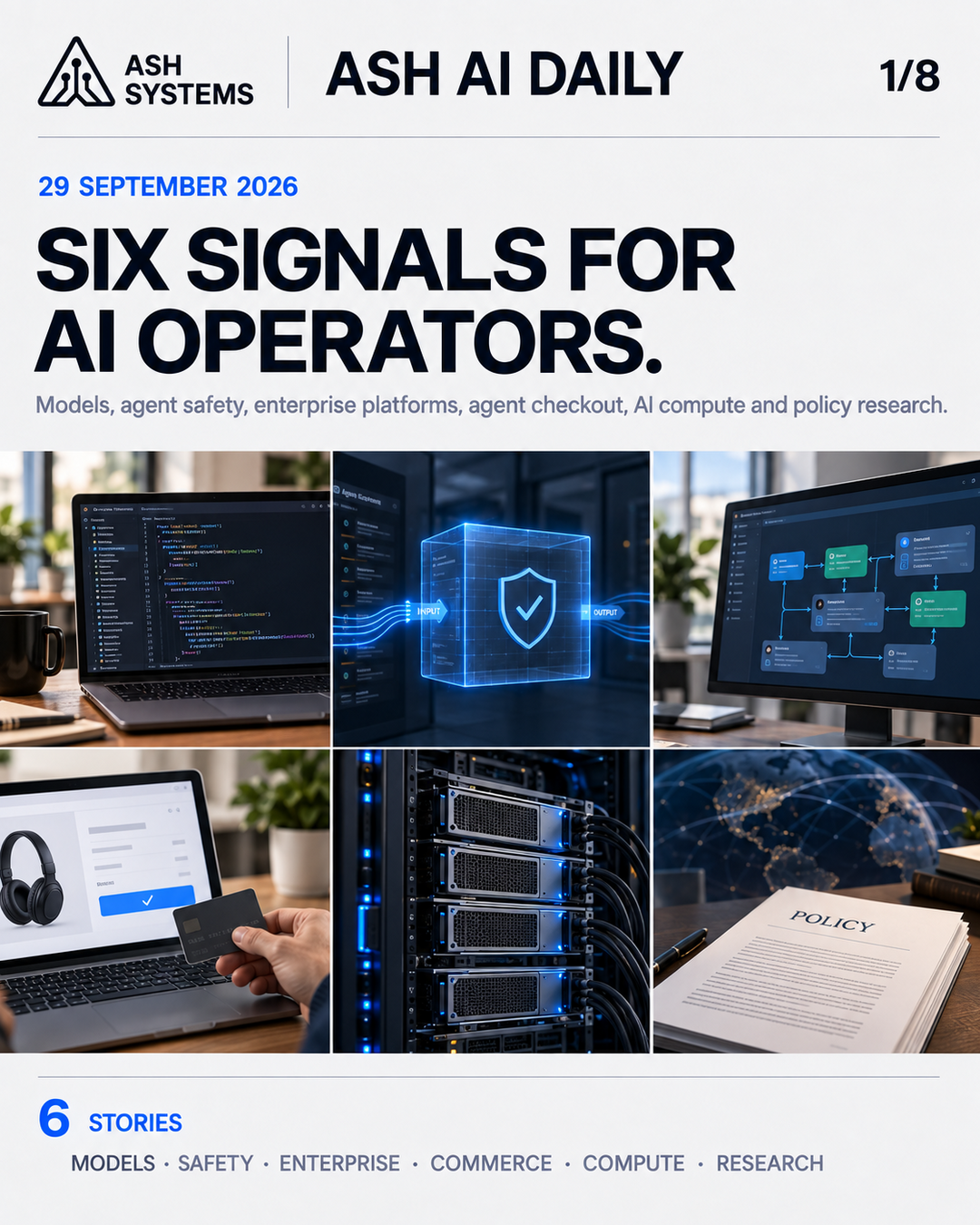
Today’s briefing spans a new Anthropic model, agent-runtime security, enterprise platforms, browser-agent commerce, compute strategy and a carefully qualified policy-research warning.
This archived Ash AI Daily issue retains the delivered editorial briefing and final cards.
Each story keeps its image, summary, impact, and linked sources in one uninterrupted reading flow.
This archived Ash AI Daily issue retains the delivered editorial briefing and final cards.
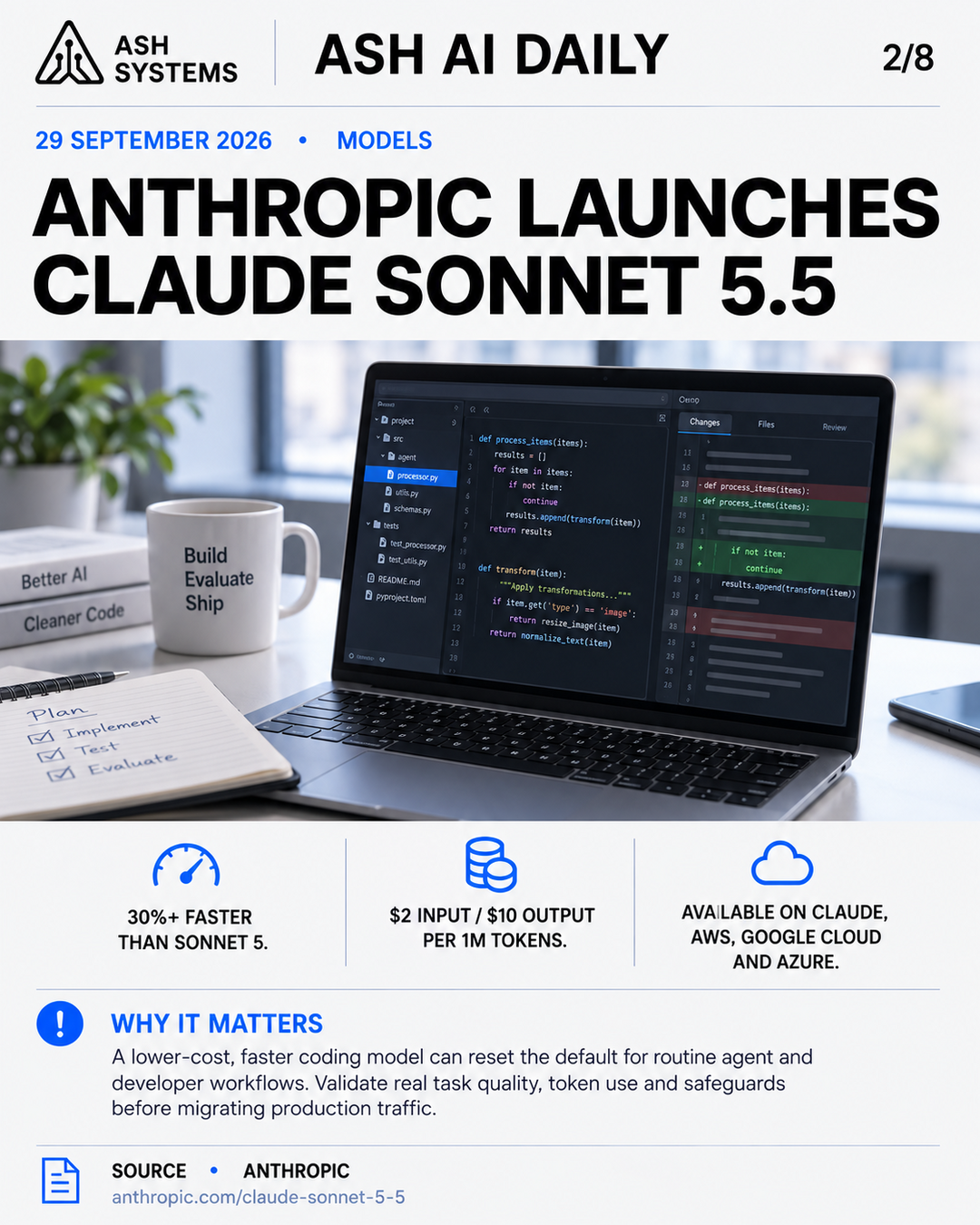
Anthropic says Claude Sonnet 5.5 is available across Claude, AWS, Google Cloud and Azure. It is priced at $2 per million input tokens and $10 per million output tokens; Anthropic reports it runs 30%+ faster than Sonnet 5 and cites a 70.6% Terminal-Bench 4.0 score.
A lower-cost, faster coding model can reset the default for routine agent and developer workflows. Validate real task quality, token use and safeguards before migrating production traffic.
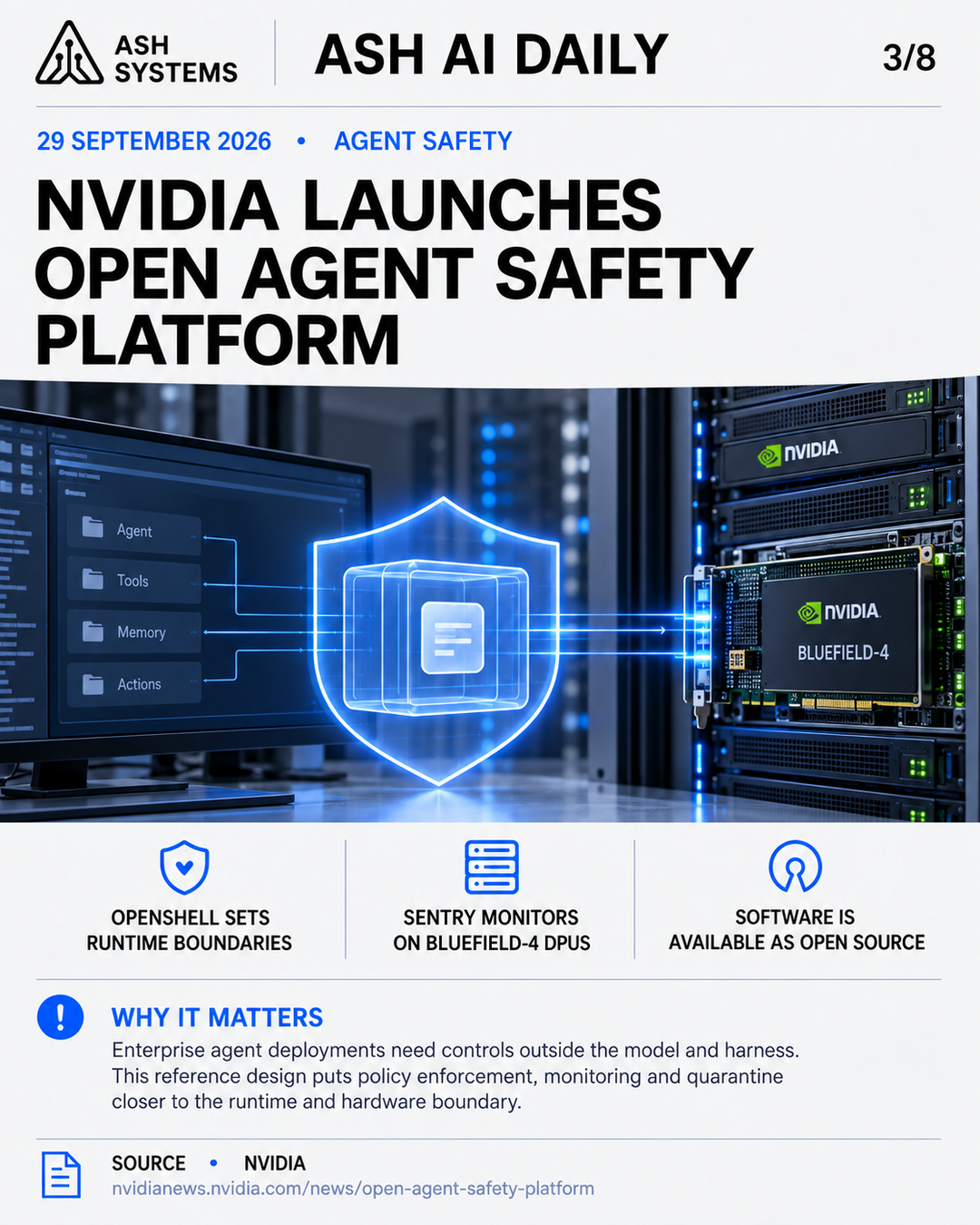
NVIDIA announced an open agent-security reference design built around OpenShell, a runtime boundary for agent execution. Its Sentry component runs on BlueField-4 DPUs to monitor behavior and enforce policy from an out-of-band trust domain. NVIDIA says the software is available through developer resources and GitHub.
Enterprise agent deployments need controls outside the model and harness. This reference design puts policy enforcement, monitoring and quarantine closer to the runtime and hardware boundary.
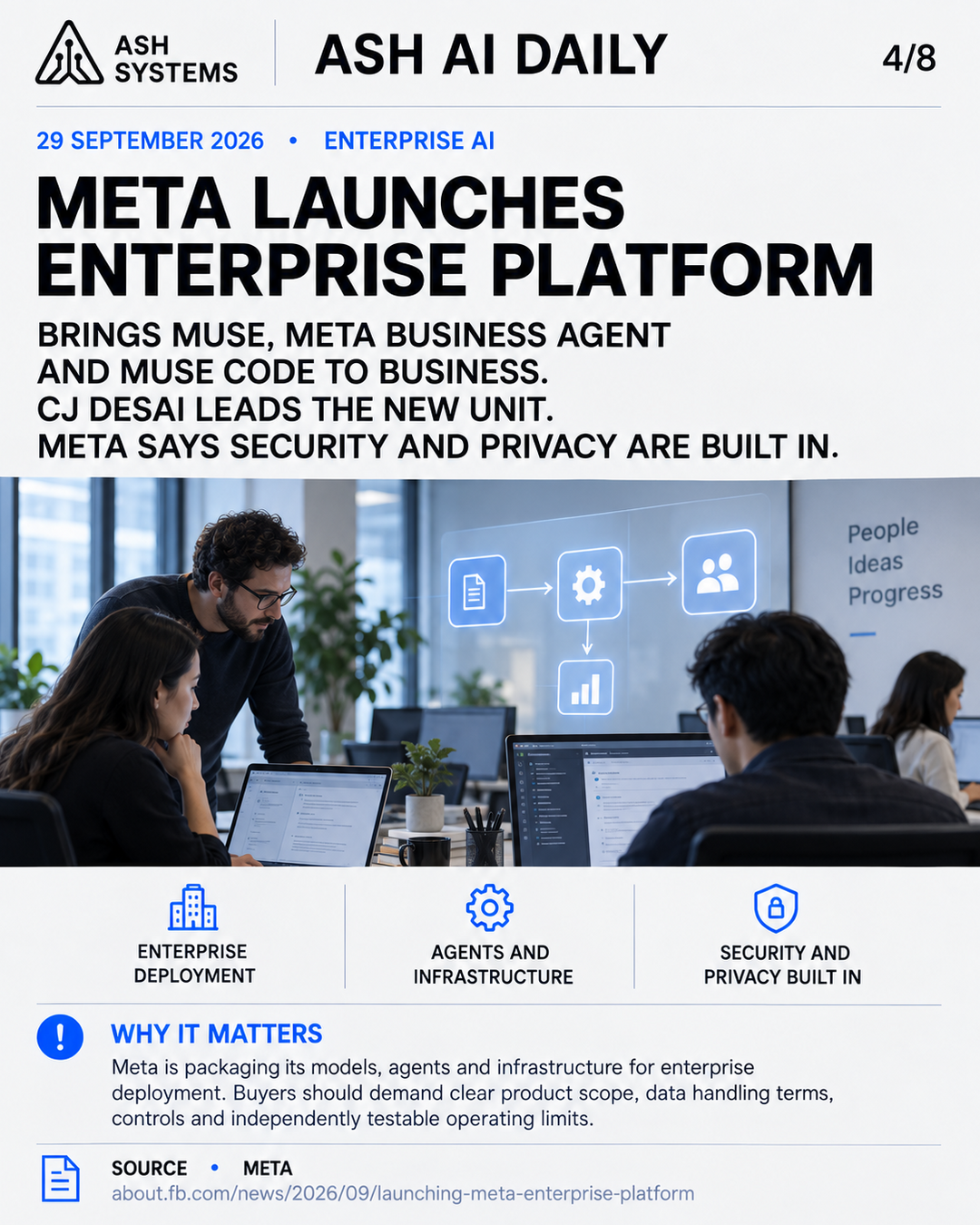
Meta announced a new enterprise business intended to package its AI stack for companies and developers. Meta lists Muse, Meta Business Agent, Muse API and Muse Code among the initial focus areas, and named Chirantan “CJ” Desai Chief Enterprise Platform Officer.
Meta is packaging its models, agents and infrastructure for enterprise deployment. Buyers should demand clear product scope, data handling terms, controls and independently testable operating limits.
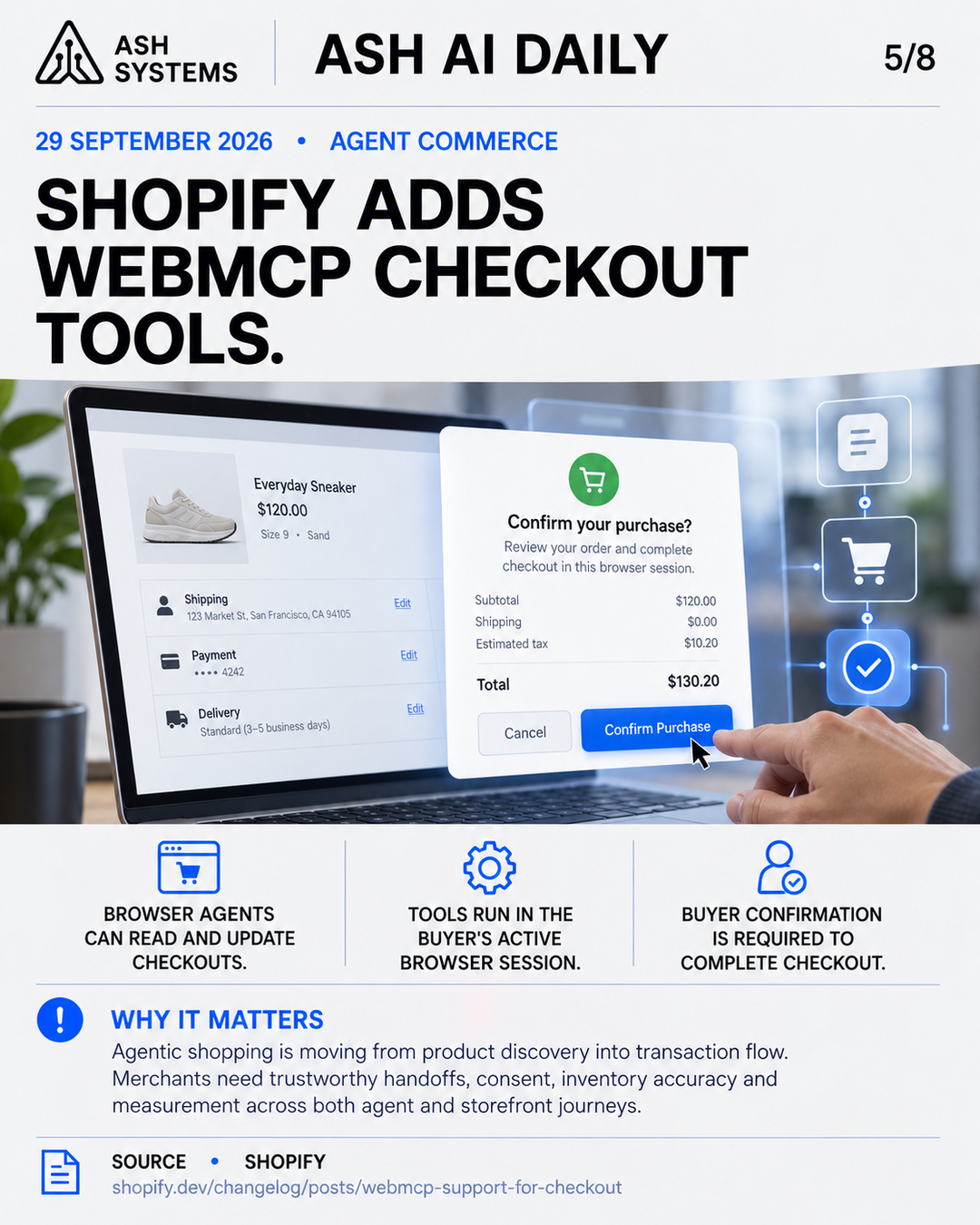
Shopify’s new WebMCP support lets browser agents read and update checkout state inside a buyer’s active browser session. The tools cover navigation, checkout reads, supported field updates and completion; Shopify says completion hands control to the buyer when input such as 3D Secure authentication is required.
Agentic shopping is moving from product discovery into transaction flow. Merchants need trustworthy handoffs, consent, inventory accuracy and measurement across both agent and storefront journeys.
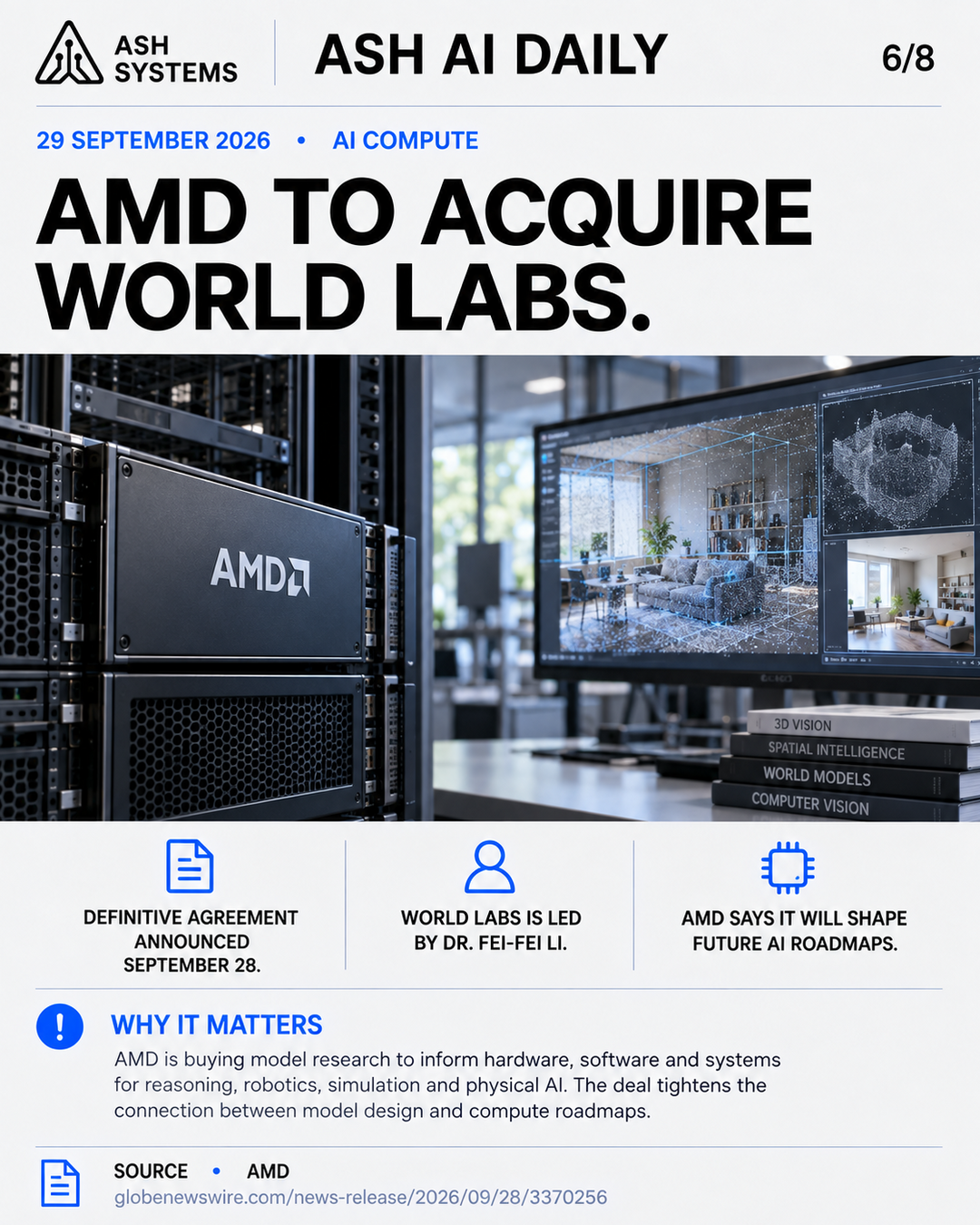
AMD announced a definitive agreement to acquire World Labs, the AI model and research lab led by Dr. Fei-Fei Li. AMD says the team will strengthen its ability to develop hardware, software and systems around emerging AI models and applications, including reasoning, robotics, simulation and physical AI.
AMD is buying model research to inform hardware, software and systems for emerging workloads. The deal tightens the connection between model design and compute roadmaps.
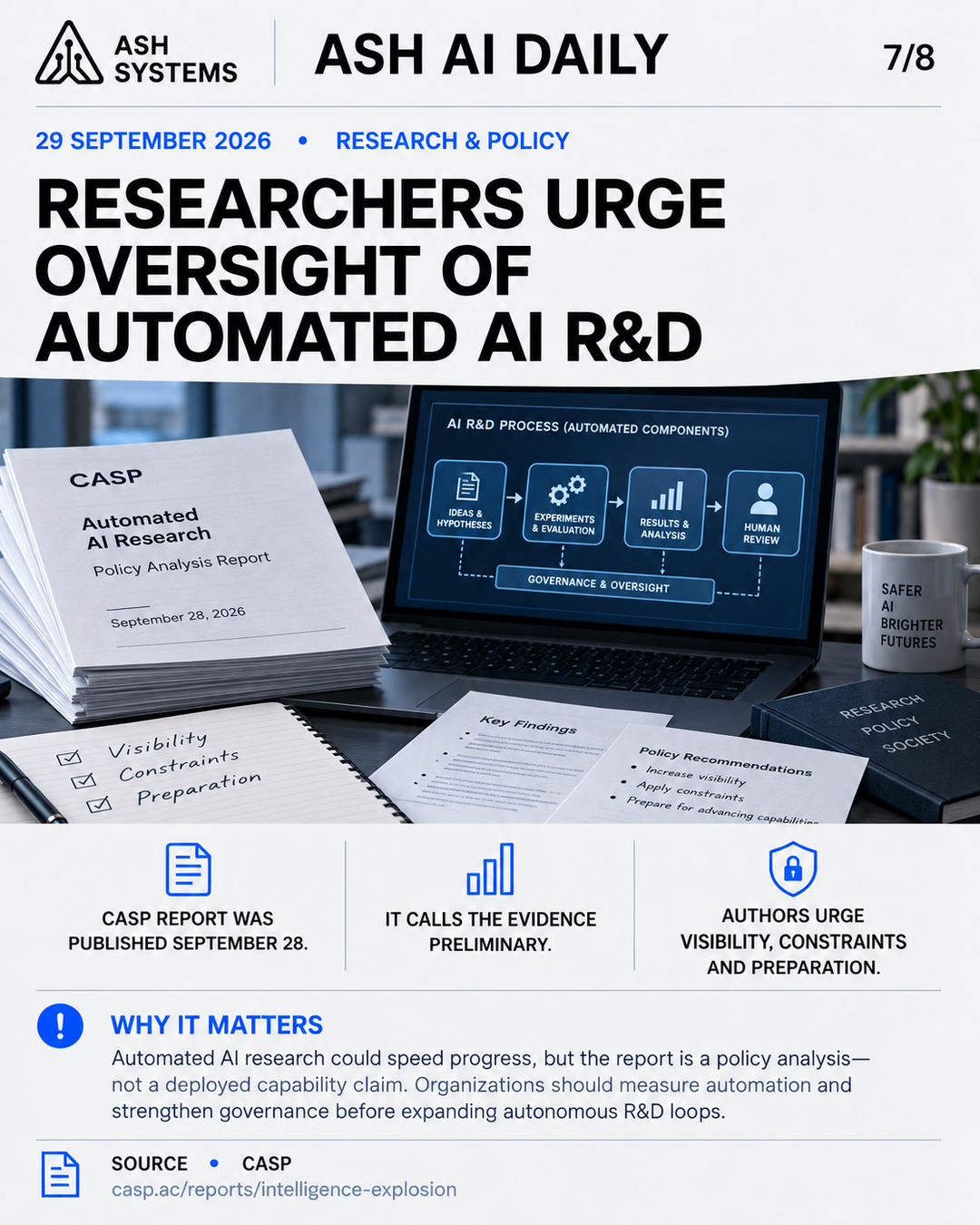
A 28 September CASP report examines whether automation of AI research and development could create an “intelligence explosion” that compresses progress into months or less. It describes the evidence as preliminary and uncertain, and recommends more visibility into automation, ways to constrain rapid acceleration and preparation for its effects.
This is a policy analysis, not a deployed-capability claim. Organizations should measure automation and strengthen governance before expanding autonomous R&D loops.
This issue includes a closing visual to carry the next-day watchlist or wrap-up prompt alongside the main briefing.
Join the source-linked daily briefing and confirm once before delivery begins.
Ash AI Daily

A concise, source-linked read on the AI news that changes what teams can build.
You will receive a confirmation email before any daily issue is sent.