
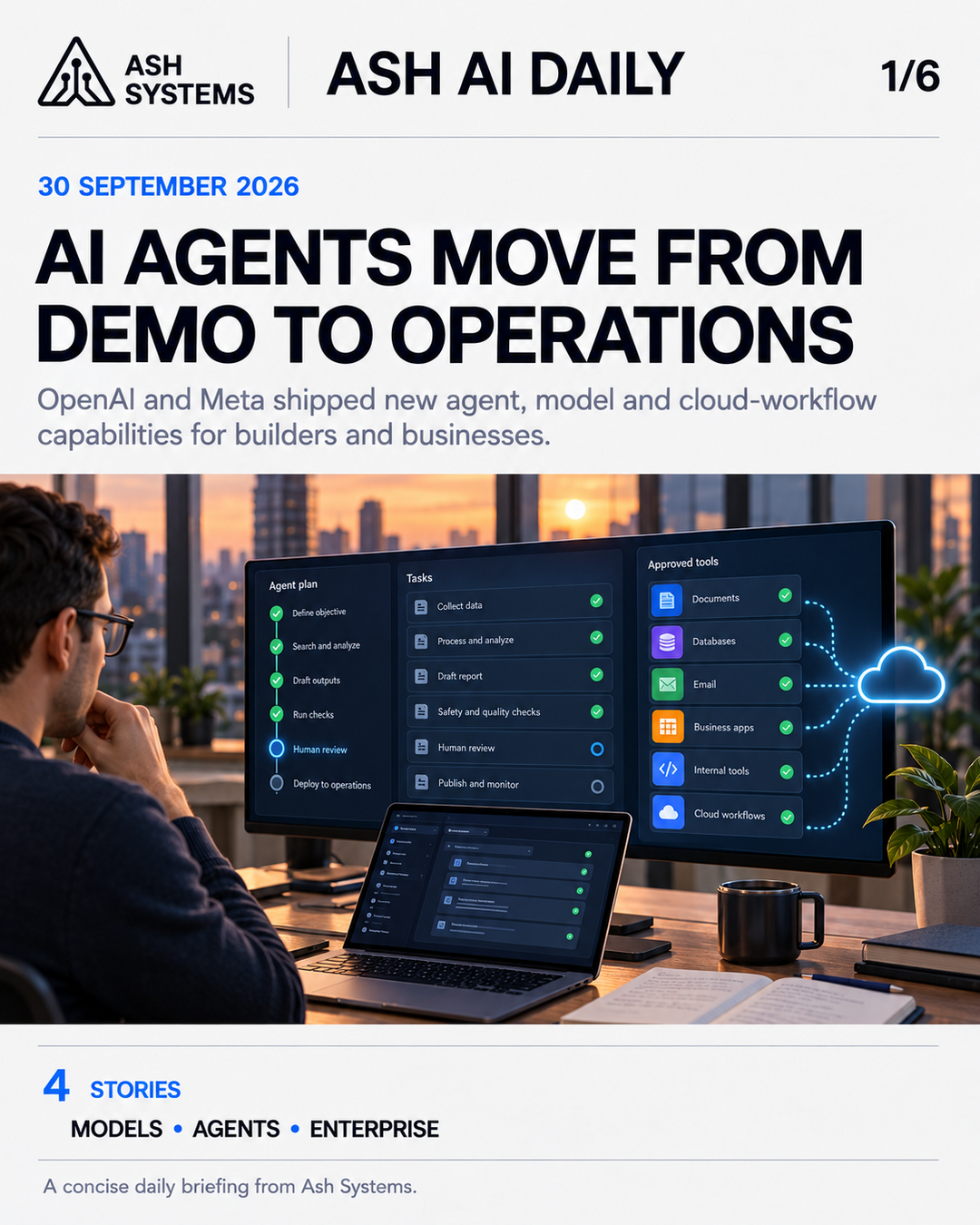
Issue 55Published September 30, 2026
Editor noteThis archived Ash AI Daily issue retains the delivered editorial briefing and final cards.
 Ash SystemsAI NewsletterDaily Issue
Today’s verified briefing tracks OpenAI’s new model and agent infrastructure alongside Meta’s small-business agent expansion.
This archived Ash AI Daily issue retains the delivered editorial briefing and final cards.
Each story keeps its image, summary, impact, and linked sources in one uninterrupted reading flow.
This archived Ash AI Daily issue retains the delivered editorial briefing and final cards.
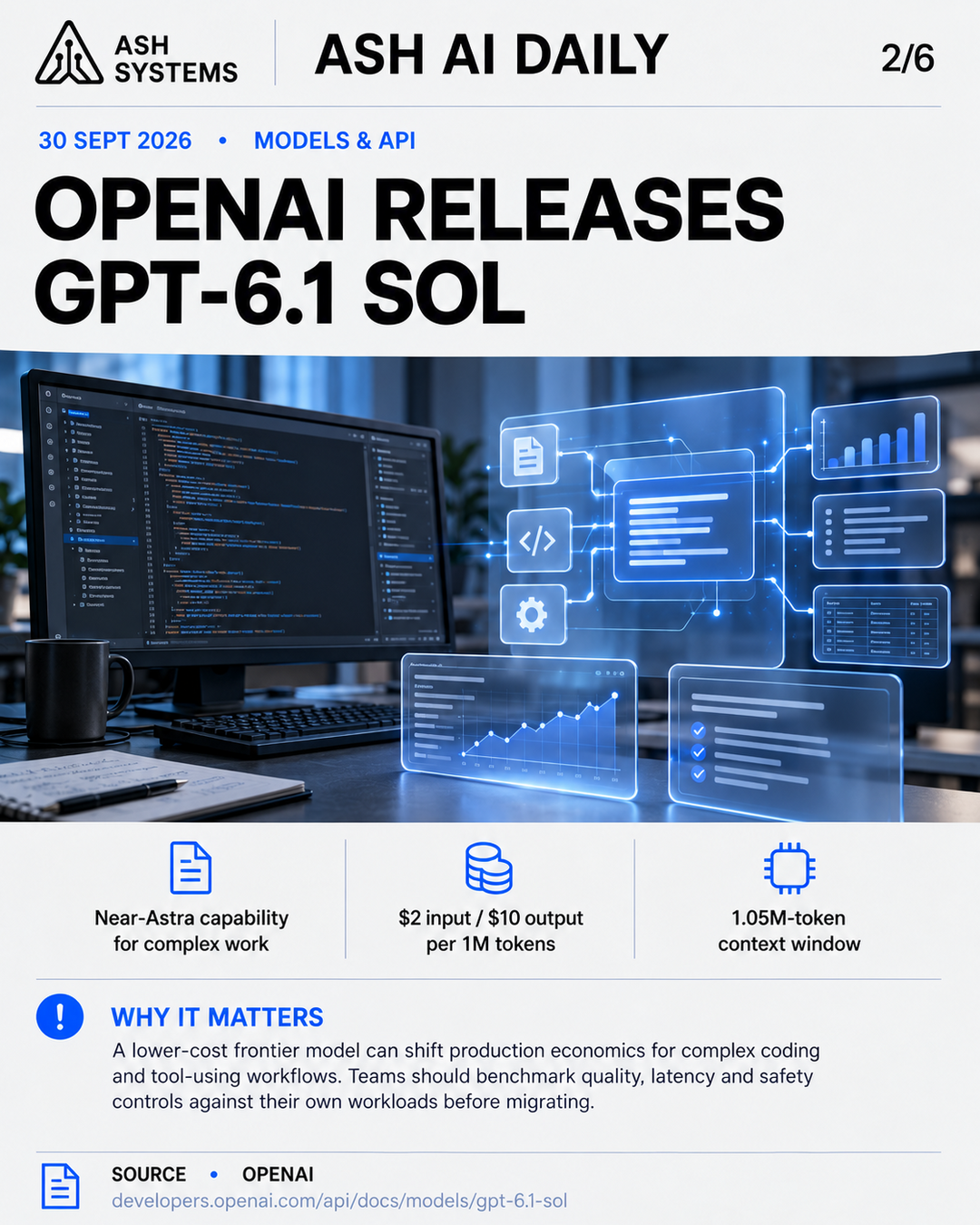
OpenAI introduced GPT-6.1 Sol as a near-Astra model for complex coding, computer use and professional work. Its model page lists a 1.05-million-token context window and standard pricing of $2 per million input tokens and $10 per million output tokens. OpenAI’s system-card addendum classifies it as Critical for cybersecurity and High for biological and chemical capability under its Preparedness Framework.
A lower-cost frontier model can shift production economics for complex coding and tool-using workflows. Teams should benchmark quality, latency and safety controls against their own workloads before migrating.
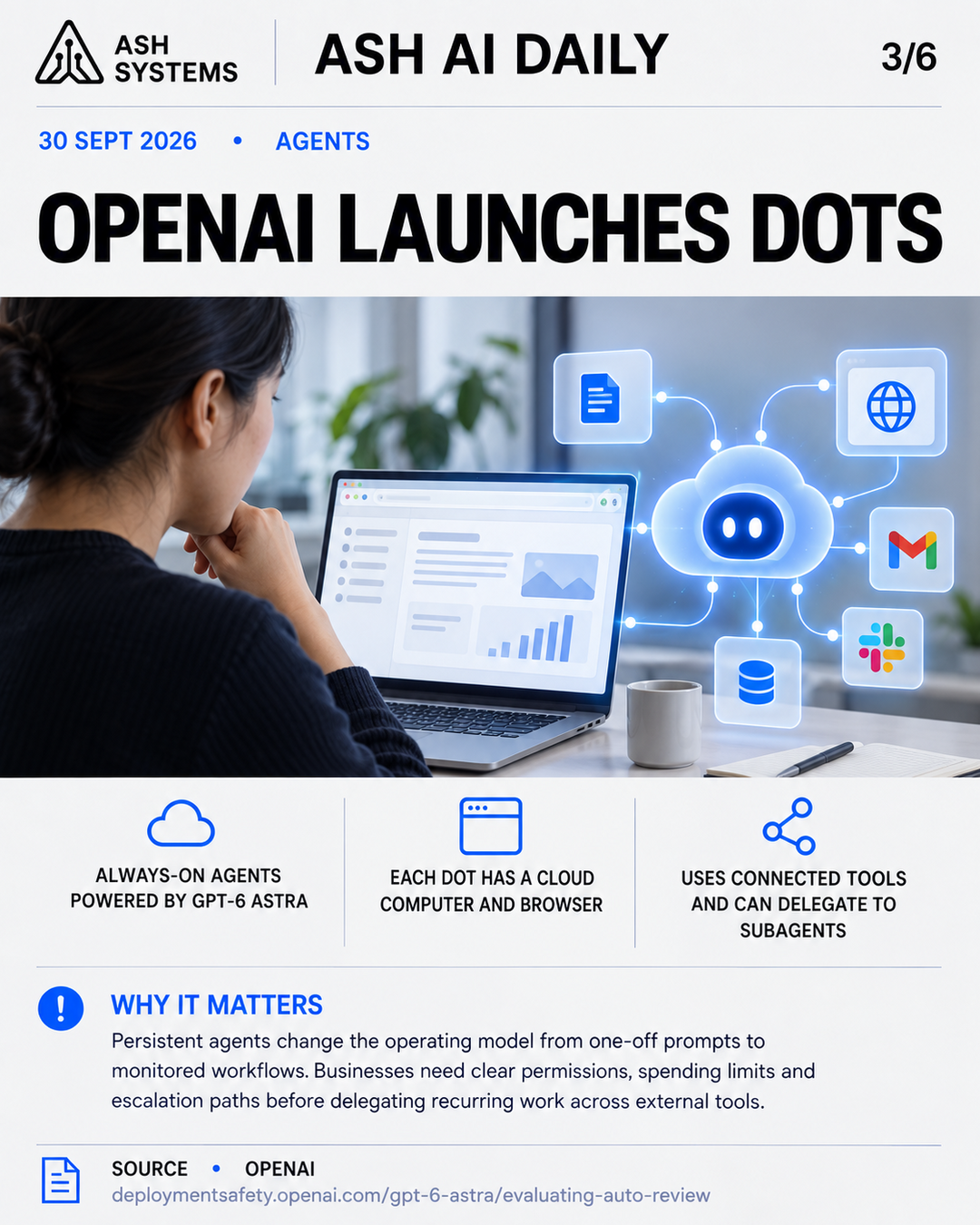
OpenAI’s GPT-6 Astra system card says dots are always-on agents powered by GPT-6 Astra. Each dot has a cloud computer and browser, can use connected tools, follow up across ChatGPT, text message, email and Slack, and may delegate work to subagents. The card describes dots as an appendix added on 29 September.
Persistent agents change the operating model from one-off prompts to monitored workflows. Businesses need clear permissions, spending limits and escalation paths before delegating recurring work across external tools.
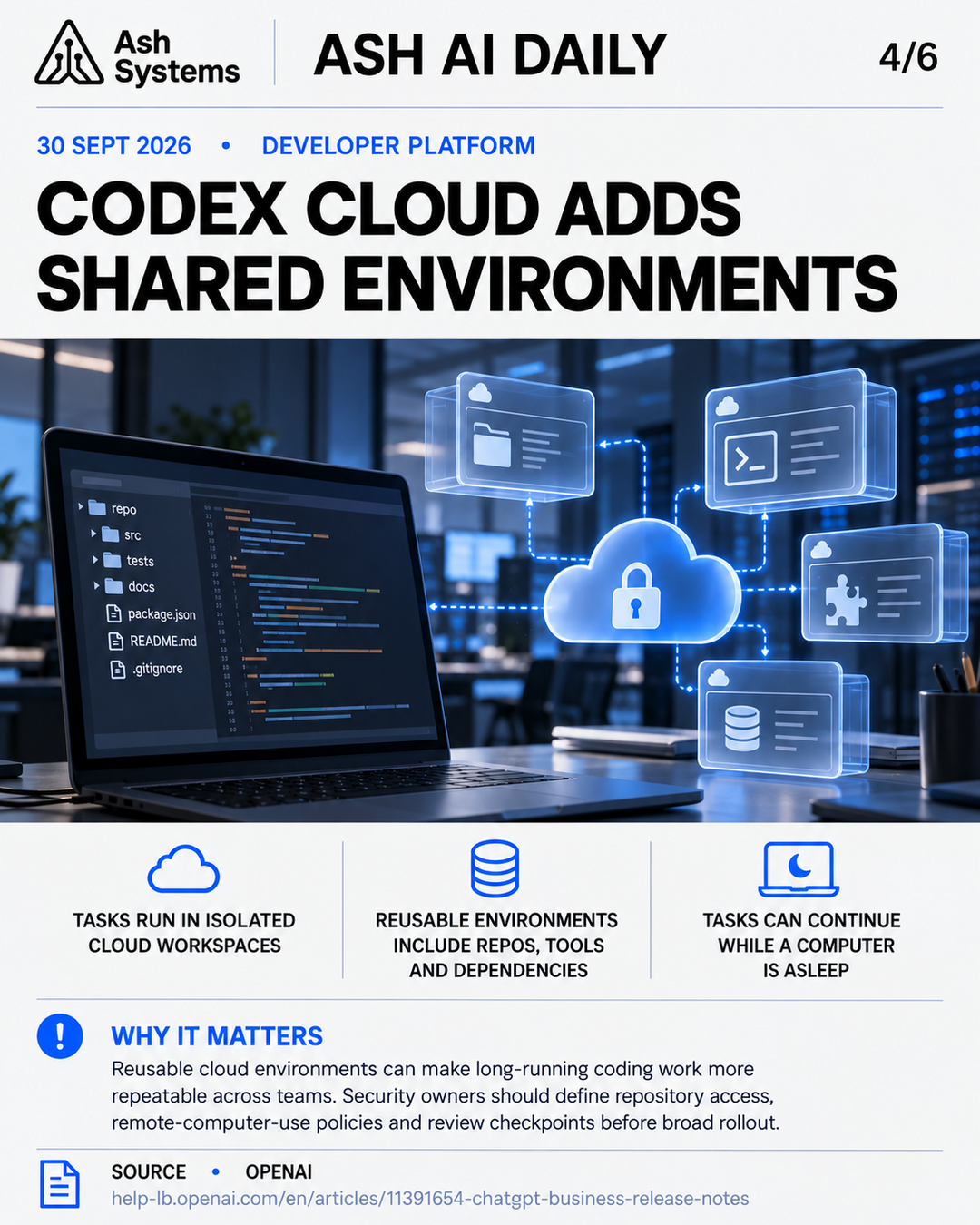
OpenAI’s 29 September Business and Enterprise release notes say Codex Cloud provides isolated cloud workspaces and reusable environments with a project’s repositories, tools and dependencies. Tasks can be started or continued from desktop, web or mobile, and continue while a computer is asleep. Enterprise users can share reusable cloud environments with authorized members.
Reusable cloud environments can make long-running coding work more repeatable across teams. Security owners should define repository access, remote-computer-use policies and review checkpoints before broad rollout.
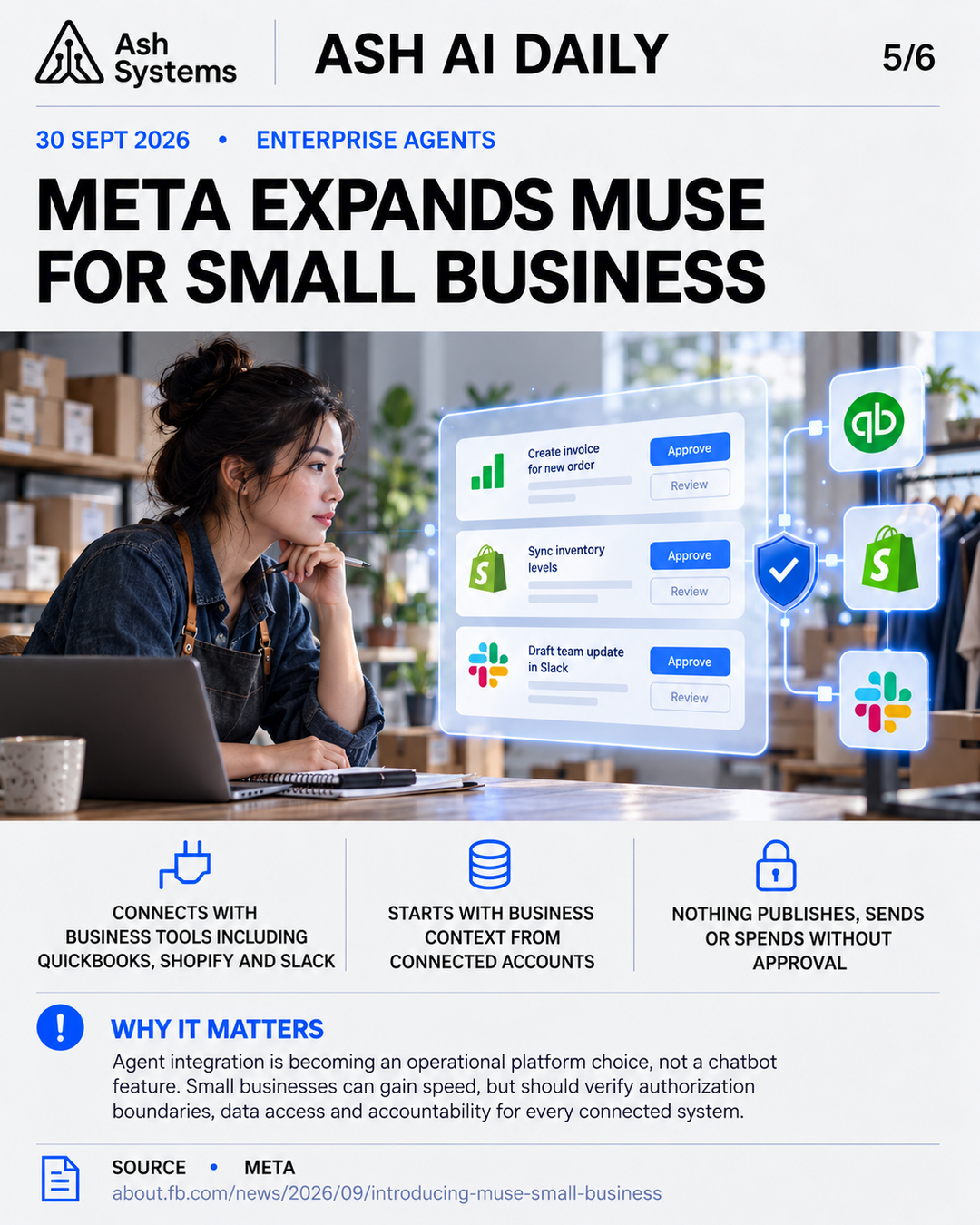
Meta announced Muse for Small Business, expanding its personal AI agent to work toward goals such as operating a business or finding customers. Meta says users can connect tools including Asana, QuickBooks, Shopify, Slack and Stripe, while Muse starts with context from those connected accounts. Meta also says nothing publishes, sends or spends without the user’s approval.
Agent integration is becoming an operational platform choice, not a chatbot feature. Small businesses can gain speed, but should verify authorization boundaries, data access and accountability for every connected system.
This issue includes a closing visual to carry the next-day watchlist or wrap-up prompt alongside the main briefing.
Join the source-linked daily briefing and confirm once before delivery begins.
Ash AI Daily

A concise, source-linked read on the AI news that changes what teams can build.
You will receive a confirmation email before any daily issue is sent.