
Issue 50Published September 25, 2026
Editor noteThis archived Ash AI Daily issue retains the delivered editorial briefing and final cards.
 Ash SystemsAI NewsletterDaily Issue
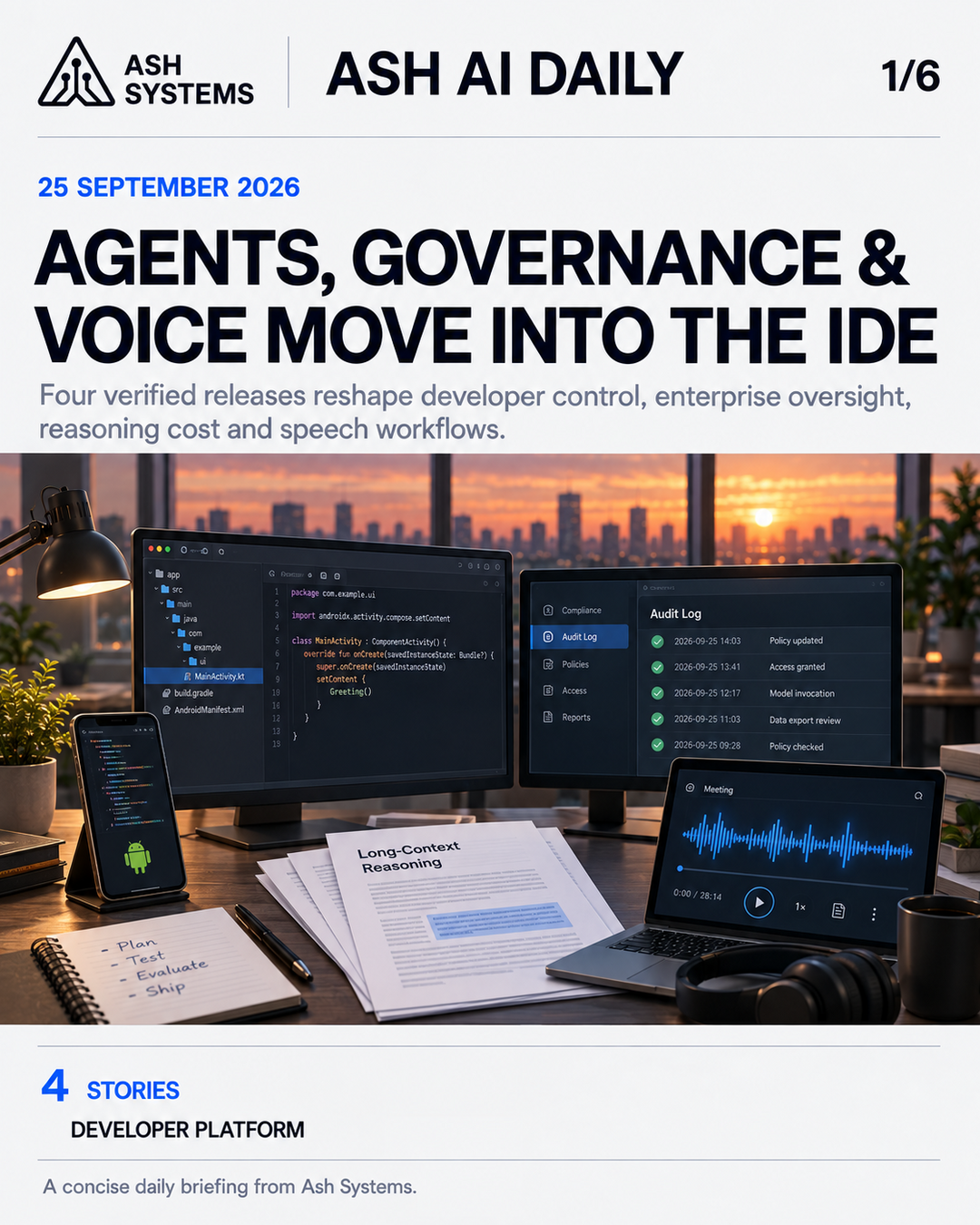
Four verified releases reshape developer control, enterprise oversight, reasoning cost and speech workflows.
This archived Ash AI Daily issue retains the delivered editorial briefing and final cards.
Each story keeps its image, summary, impact, and linked sources in one uninterrupted reading flow.
This archived Ash AI Daily issue retains the delivered editorial briefing and final cards.
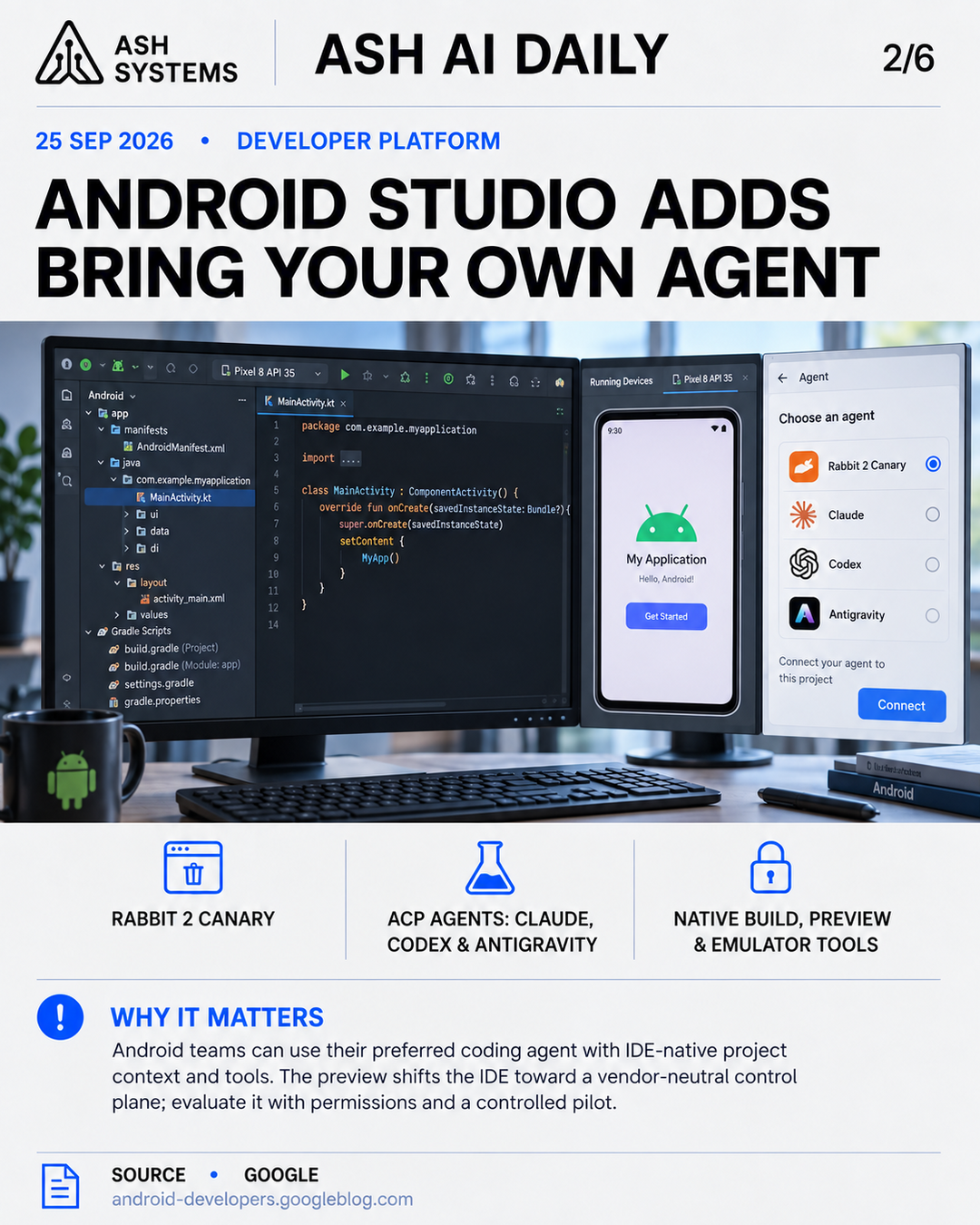
Google introduced BYOA in Android Studio Rabbit 2 Canary. It supports ACP-compatible agents including Claude Agent, Codex and Google Antigravity, while the IDE supplies the project graph, build diagnostics, Compose previews, SDK tools and emulator control.
This makes the IDE—not a single model vendor—the control plane for Android coding agents. Teams can keep their preferred agent while supplying Android-specific project context and tools, then apply permissions to higher-risk actions. It is a preview, so enterprise rollout should begin with controlled evaluation.
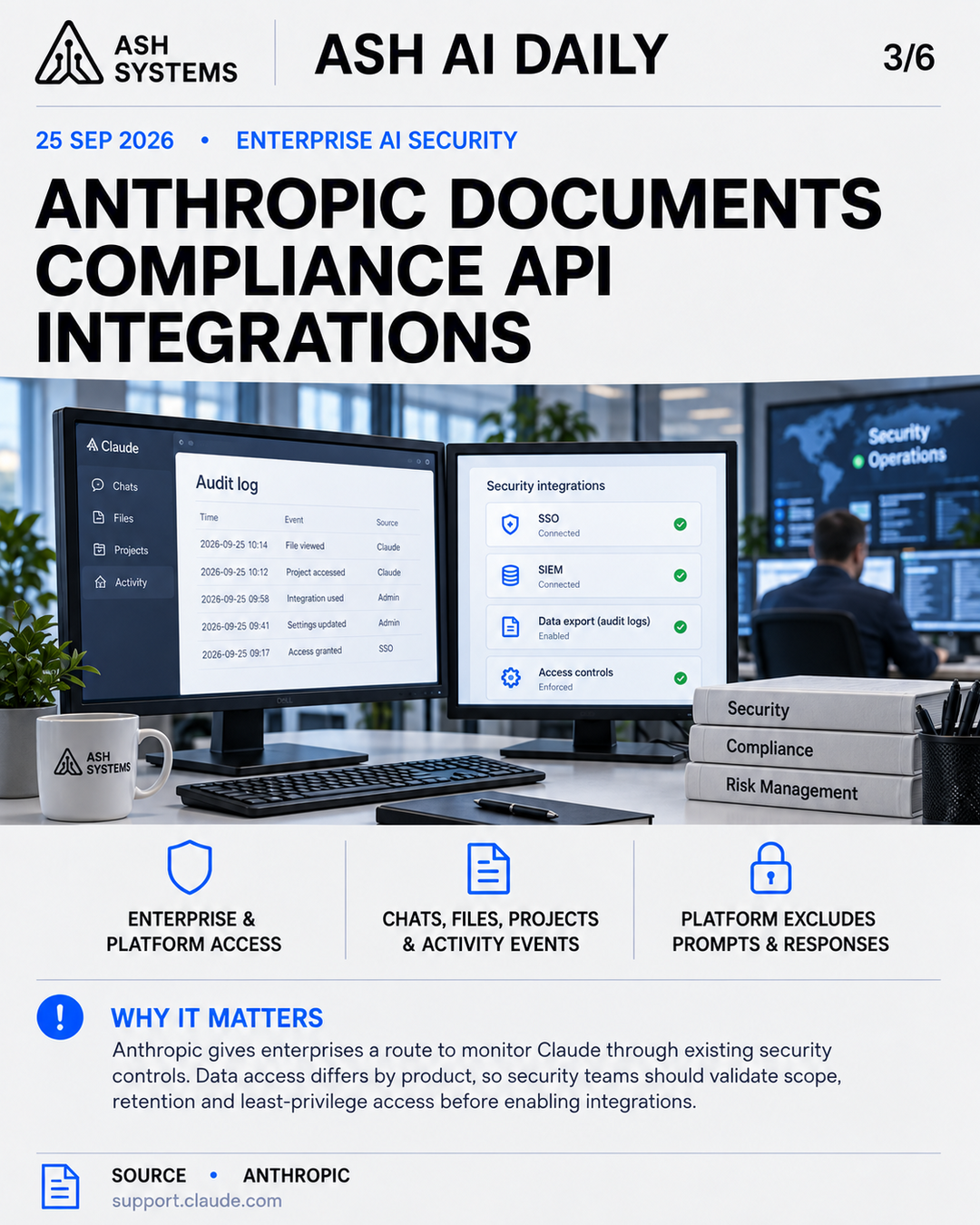
Anthropic updated its Compliance API integration guidance for Claude Enterprise and Platform customers. Enterprise coverage can include chats, uploaded files, projects and selected Cowork and Claude Code session content; Platform coverage includes activity and resource events but excludes conversation prompts and responses.
Agent adoption is pushing AI activity into existing security operations. Anthropic’s integration catalog gives enterprises a route to monitor Claude activity through DLP, SIEM and related controls, but the data boundary differs by product. Security teams should validate scope, retention and least-privilege access before enabling it.
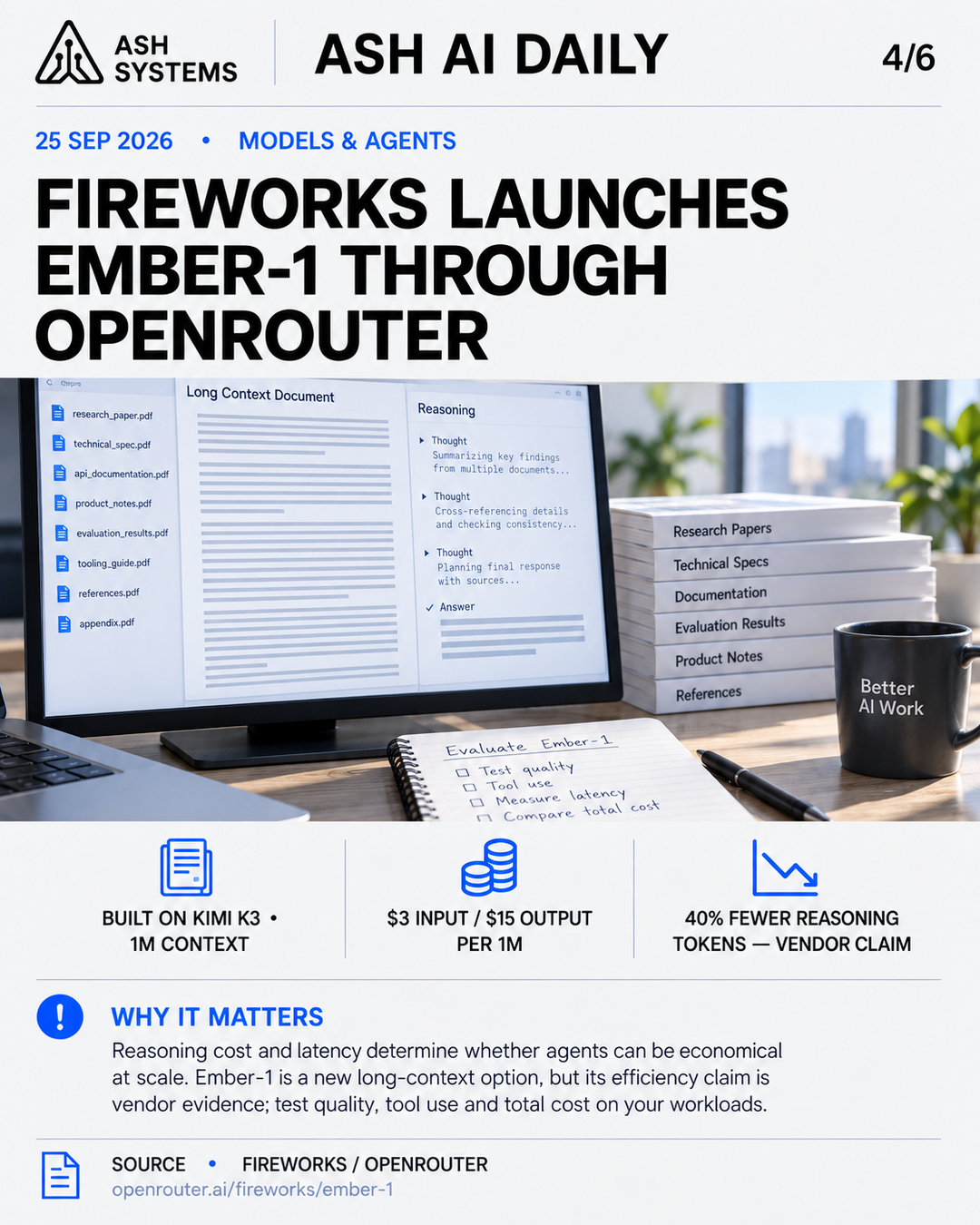
OpenRouter lists Ember-1, a Fireworks Research model built on Kimi K3, with a one-million-token context window and pricing of $3 per million input tokens and $15 per million output tokens. Fireworks says it uses roughly 40% fewer reasoning tokens than the base model while maintaining comparable quality in its evaluations.
Reasoning cost and latency determine whether agents can be economical at scale. Ember-1 is a new option for long-context coding and tool workflows, but its efficiency claim is vendor evaluation evidence—not an independent benchmark. Builders should test quality, tool use and total cost on their own workloads.
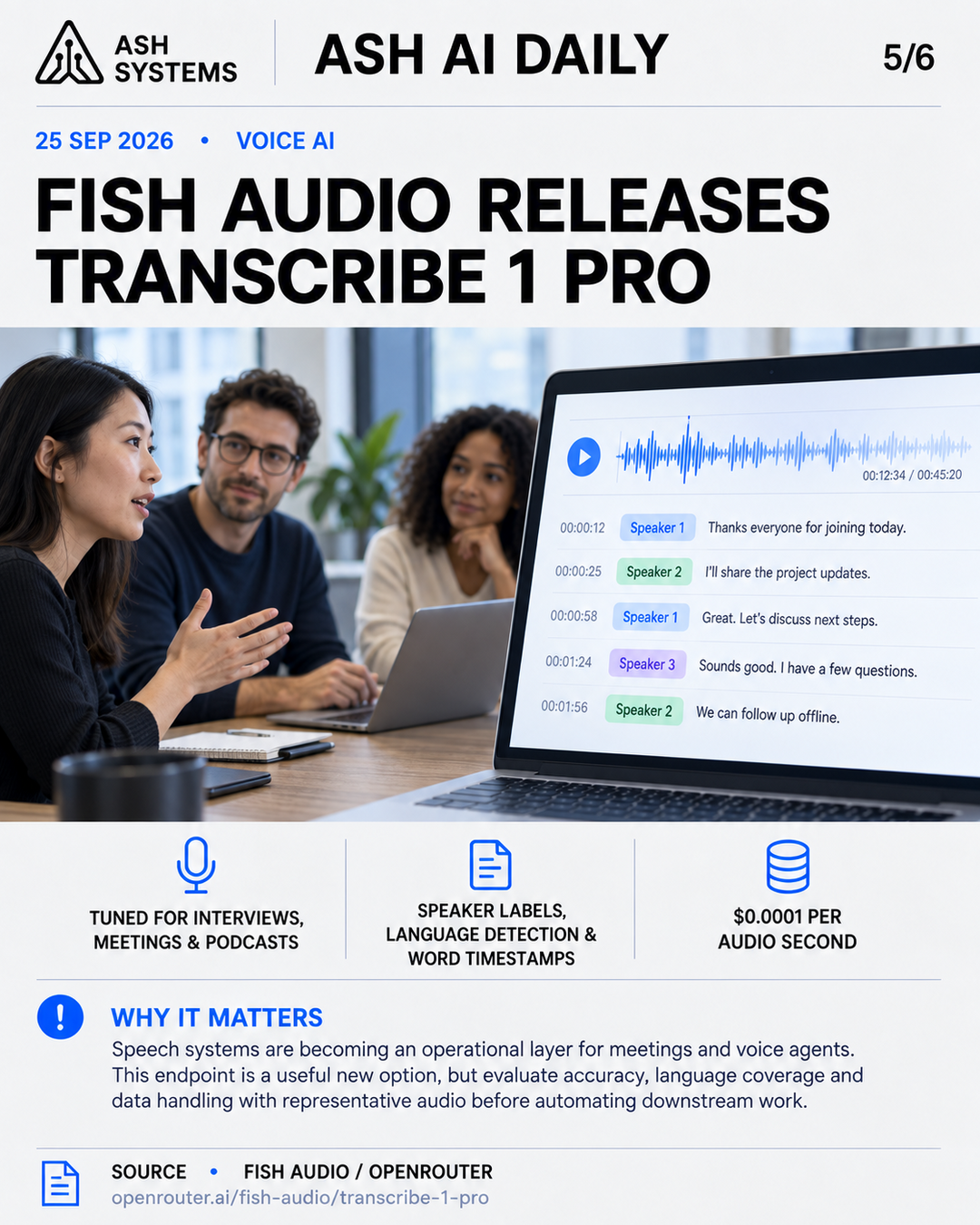
OpenRouter lists Fish Audio’s Transcribe 1 Pro for interviews, meetings and podcasts. It provides inline speaker markers, automatic language detection, vocal-event cues and timestamped word-level segments at a listed rate of $0.0001 per audio second.
Speech systems are becoming an operational layer for meetings and voice agents, where speaker attribution and timestamps directly affect downstream automation. This endpoint is a useful new option, but the listed capabilities and uptime are provider claims; evaluate accuracy, language coverage and data handling with representative audio.

This issue includes a closing visual to carry the next-day watchlist or wrap-up prompt alongside the main briefing.
Join the source-linked daily briefing and confirm once before delivery begins.
Ash AI Daily

A concise, source-linked read on the AI news that changes what teams can build.
You will receive a confirmation email before any daily issue is sent.