Issue 104Published November 18, 2026
Editor noteThis archived Ash AI Daily issue retains the delivered editorial briefing and final cards.
 Ash SystemsAI NewsletterDaily Issue
Four verified operating signals: Microsoft’s new enterprise-agent stack and transparency effort, OpenAI’s GPT-6.2 safety disclosure, and a privacy control for Google Search’s AI Mode.
This archived Ash AI Daily issue retains the delivered editorial briefing and final cards.
Each story keeps its image, summary, impact, and linked sources in one uninterrupted reading flow.
This archived Ash AI Daily issue retains the delivered editorial briefing and final cards.
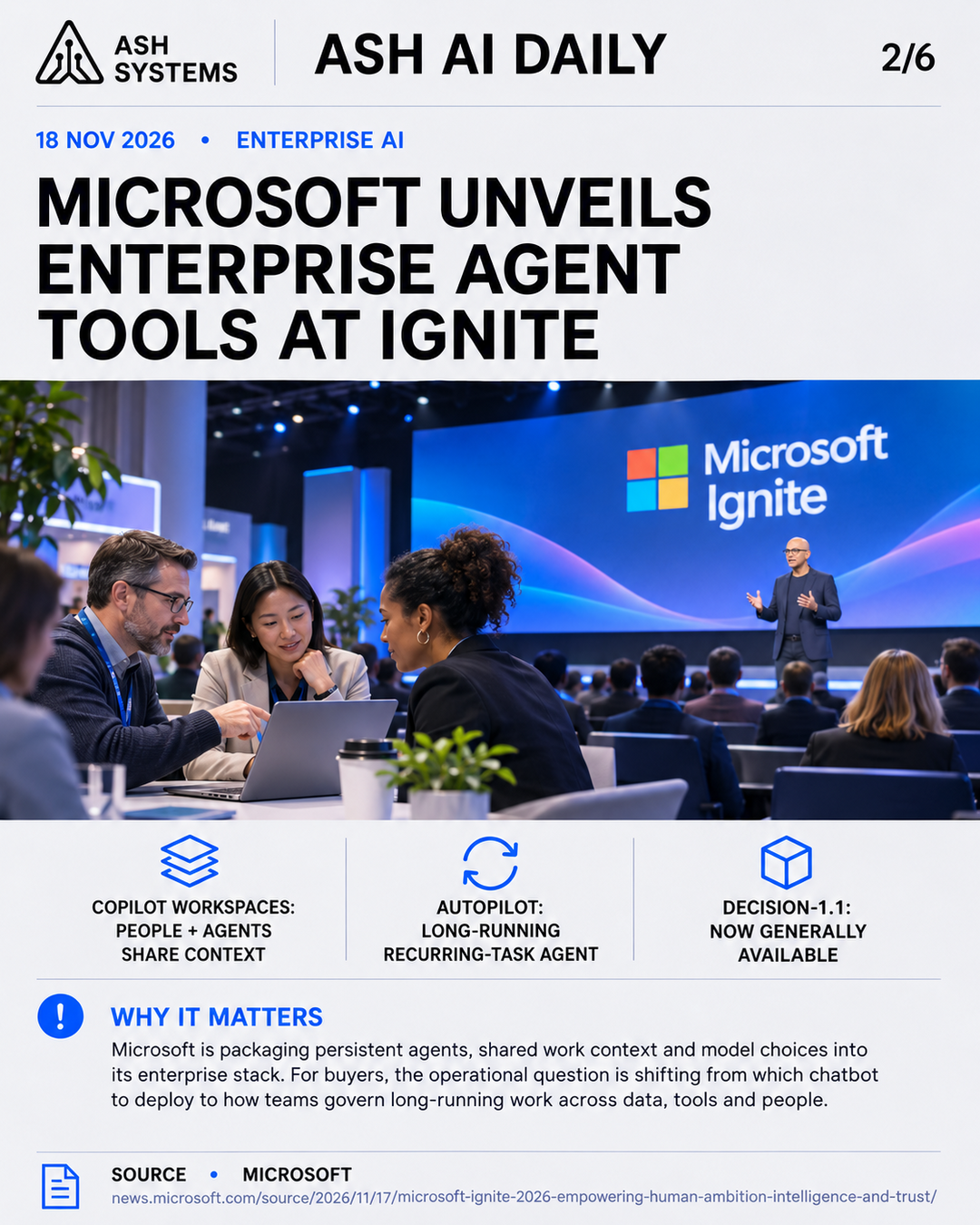
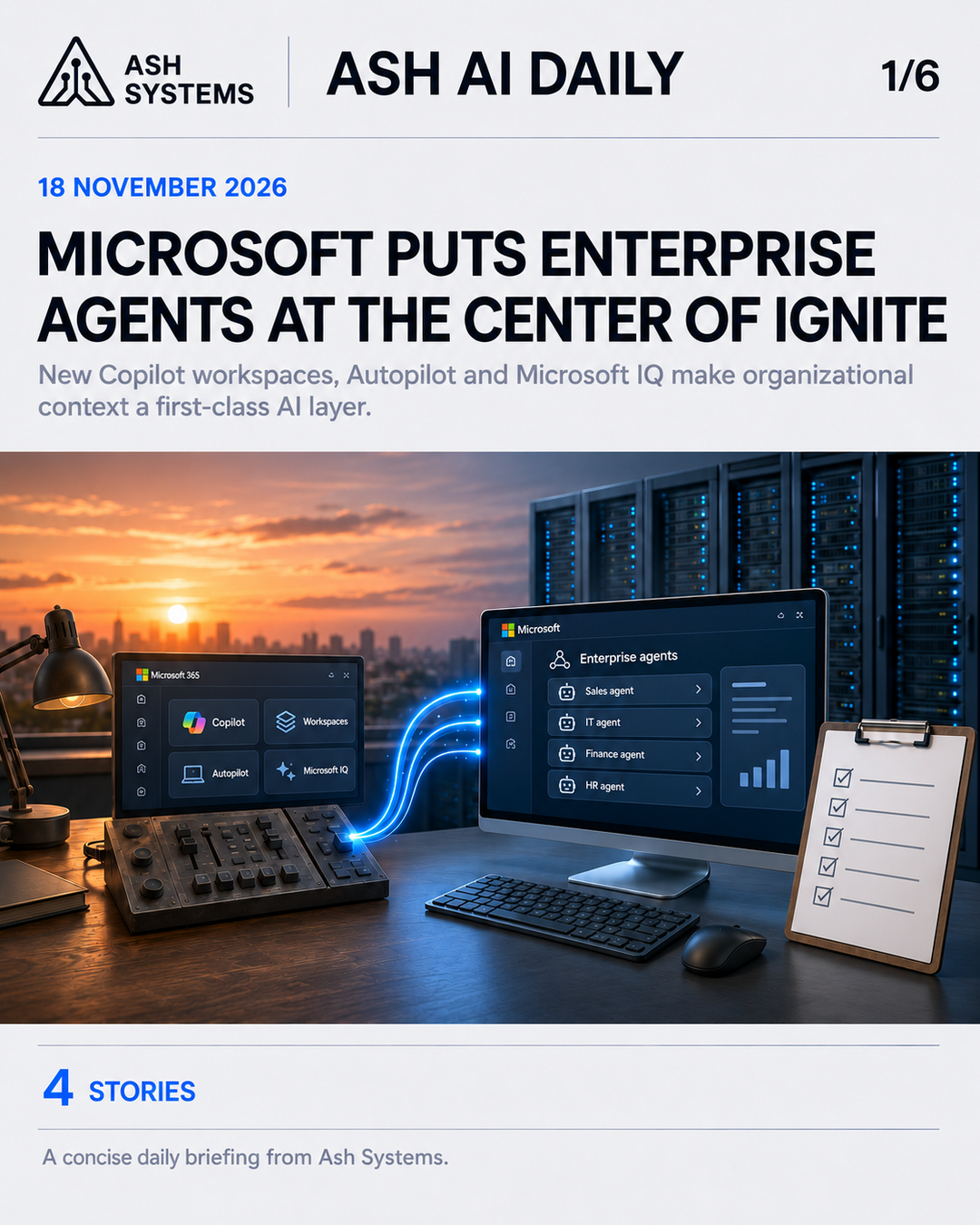
Microsoft introduced Copilot Workspaces for people and agents to share context, Autopilot for long-running recurring tasks, Microsoft IQ for governed reusable enterprise context, and general availability of Microsoft-Decision-1.1. It also said Foundry’s new continuous-improvement tools can optimize agents using production signals for quality, latency and cost.
Enterprise AI is moving from standalone assistants to persistent, data-connected systems. The operational challenge is now governing durable context, delegated actions, cost and reliability across teams—not simply choosing a chatbot.
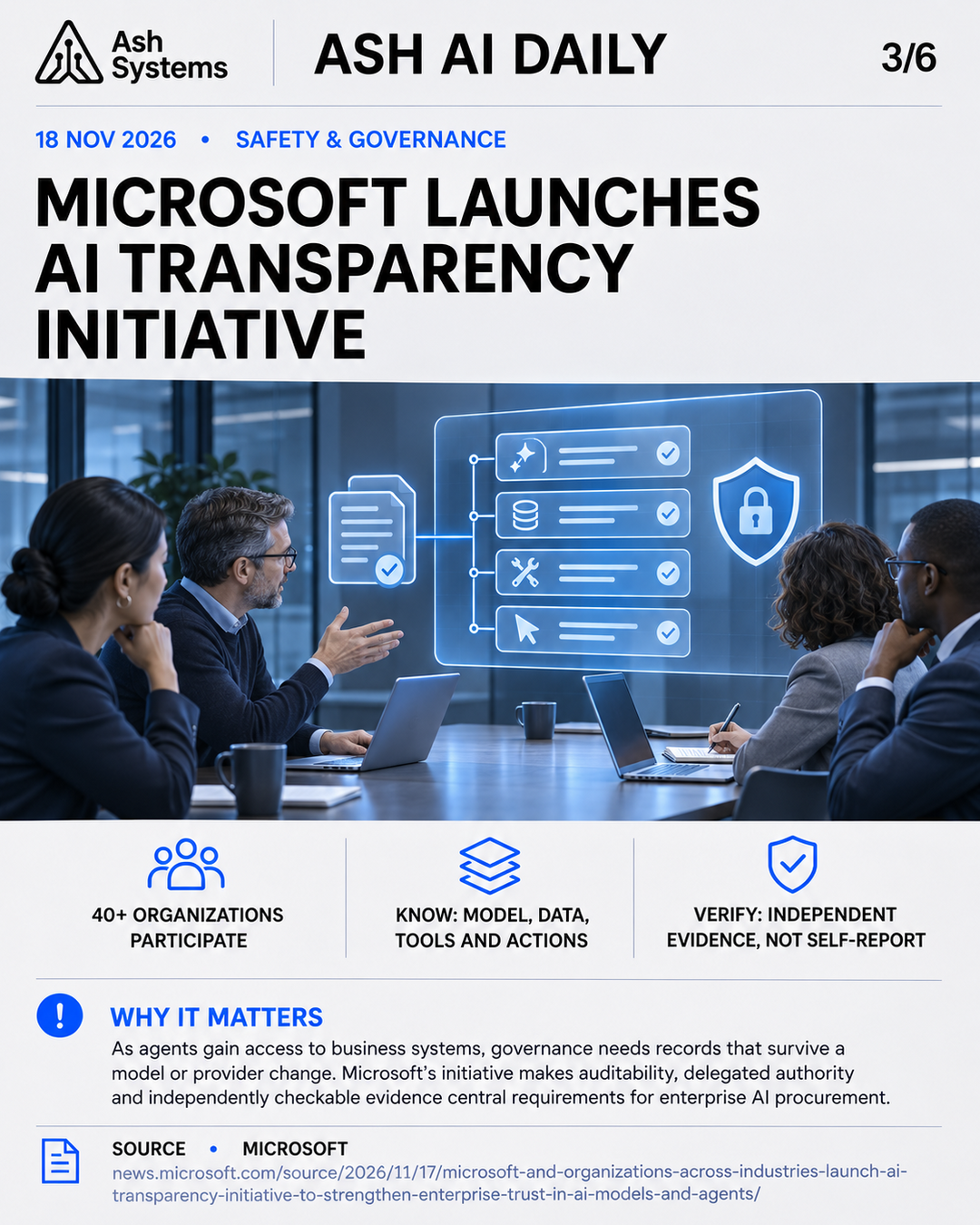
Microsoft said it is working with more than 40 organizations, including Accenture, Adobe, KPMG, Mastercard and Volvo Cars, on a common approach to AI transparency, security and governance across models and providers. The initiative focuses on better visibility into how models and agents use enterprise data and take actions.
Buyers deploying agents across multiple vendors need evidence that supports audit, accountability and security review. This is a standards initiative, not a finished control plane, but it signals where enterprise governance requirements are heading.
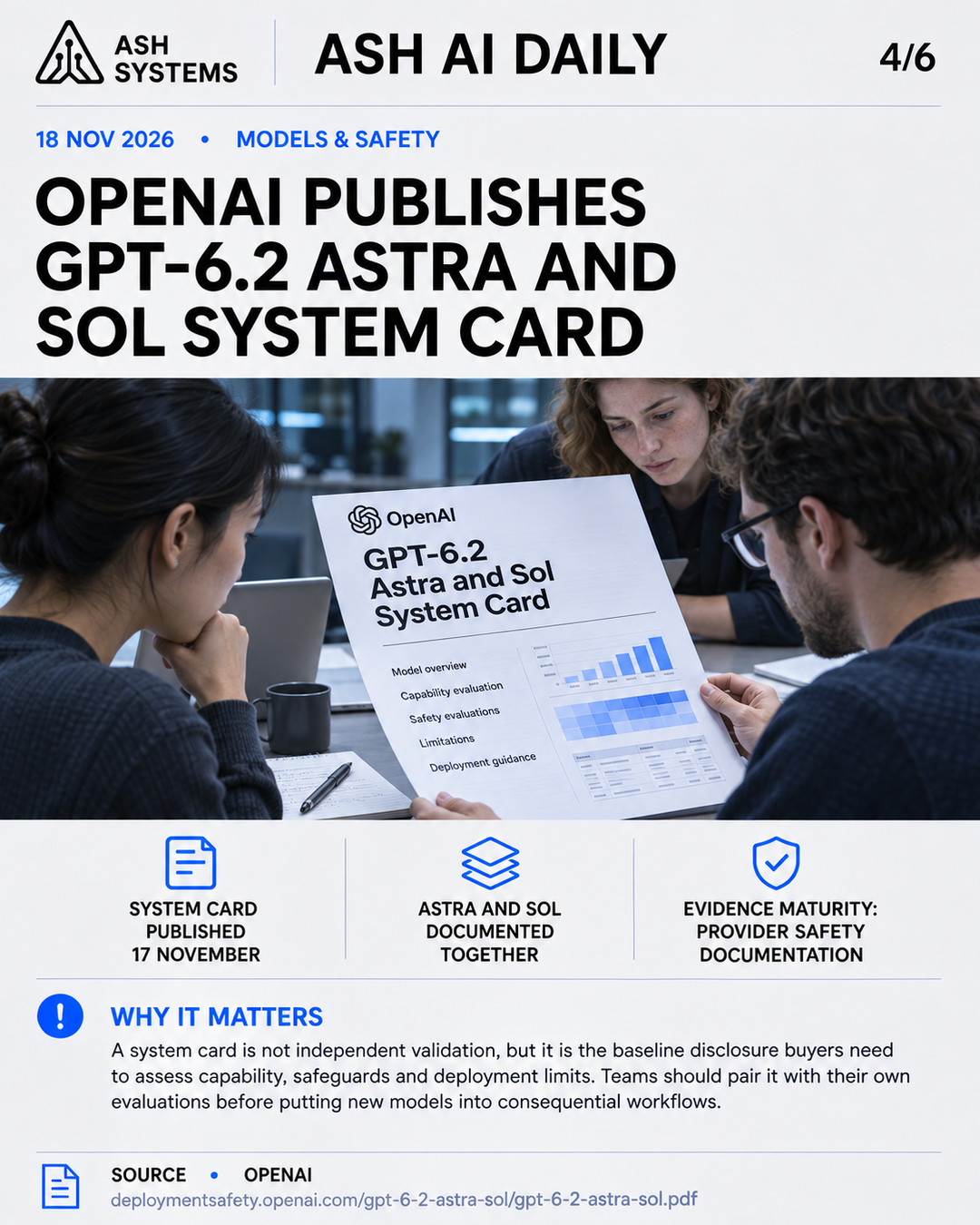
OpenAI published a 119-page system card for GPT-6.2 Astra and Sol. The company states that Sol meets its Critical threshold in cybersecurity and High threshold in biological and chemical capabilities, and describes safeguards including access restrictions, monitoring, red-teaming and stronger containment for internal research environments.
A system card is deployment evidence, not an independent replication. Still, the stated capability thresholds and layered controls matter to teams deciding which models to permit for sensitive research, code, and agentic workflows.
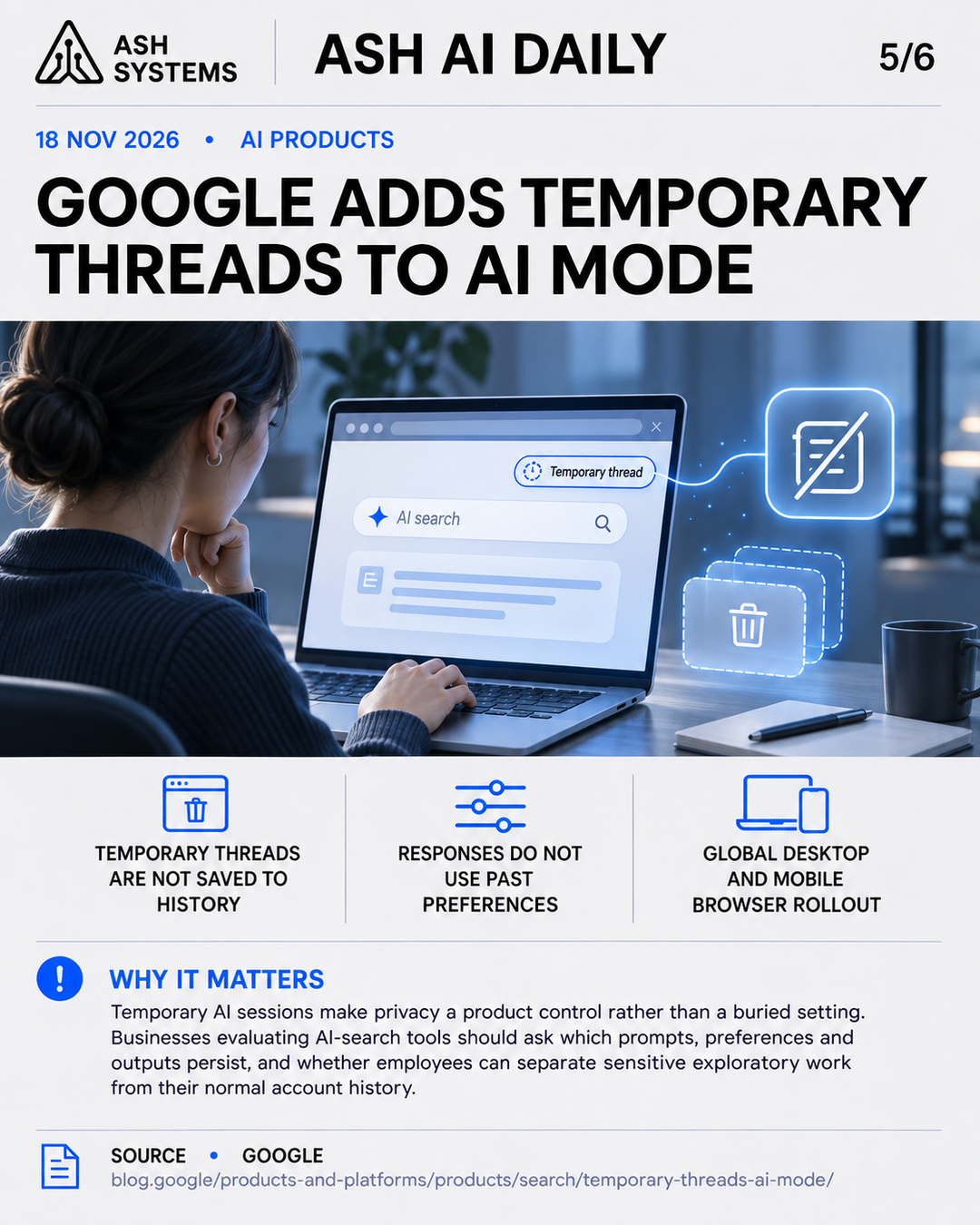
Google is rolling out temporary threads globally in AI Mode on desktop and mobile browsers. Google says the sessions are detached from the account: responses do not use past preferences, influence future personalization, or save to Search history, and the thread disappears when it is closed.
Privacy controls affect whether people will bring sensitive exploratory work into AI products. For organizations, temporary sessions can reduce persistence risk for ad hoc research, but they do not replace a documented data-governance policy.
This issue includes a closing visual to carry the next-day watchlist or wrap-up prompt alongside the main briefing.
Join the source-linked daily briefing and confirm once before delivery begins.
Ash AI Daily

A concise, source-linked read on the AI news that changes what teams can build.
You will receive a confirmation email before any daily issue is sent.