Issue 89Published November 3, 2026
Editor noteThis archived Ash AI Daily issue retains the delivered editorial briefing and final cards.
 Ash SystemsAI NewsletterDaily Issue
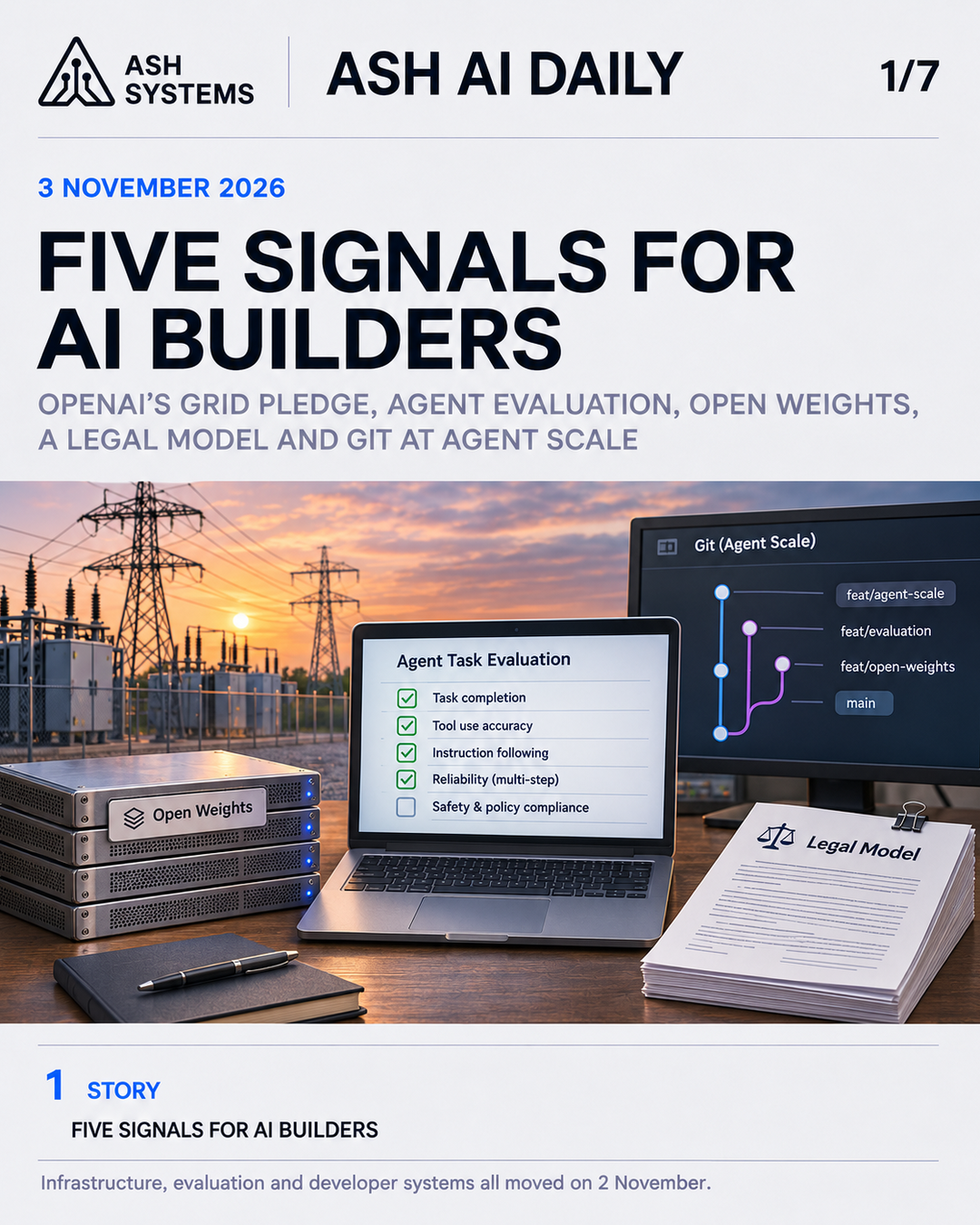
Five verified signals across compute infrastructure, agent evaluation, open models, developer platforms and specialised model access.
This archived Ash AI Daily issue retains the delivered editorial briefing and final cards.
Each story keeps its image, summary, impact, and linked sources in one uninterrupted reading flow.
This archived Ash AI Daily issue retains the delivered editorial briefing and final cards.
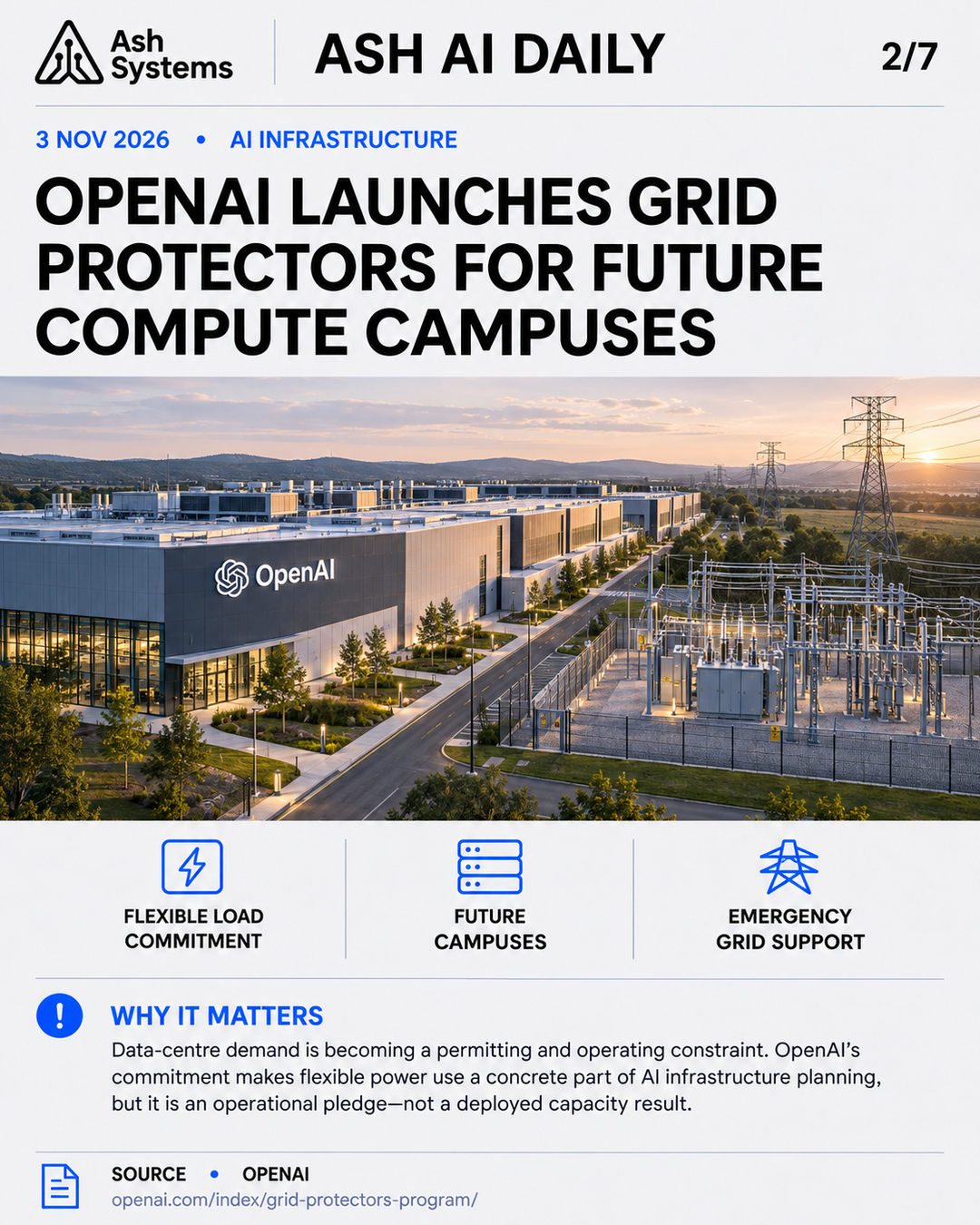
OpenAI introduced Grid Protectors, a program for future compute campuses to reduce electricity demand when grids are under strain. Its Georgia starting point includes an agreement for up to 1,000 MW of flexible demand response; OpenAI says campuses will pay their own service and infrastructure costs.
AI data-centre growth is now inseparable from local power-system planning. Flexible-load commitments could become a practical requirement for compute expansion, but results depend on implementation with utilities and regulators.
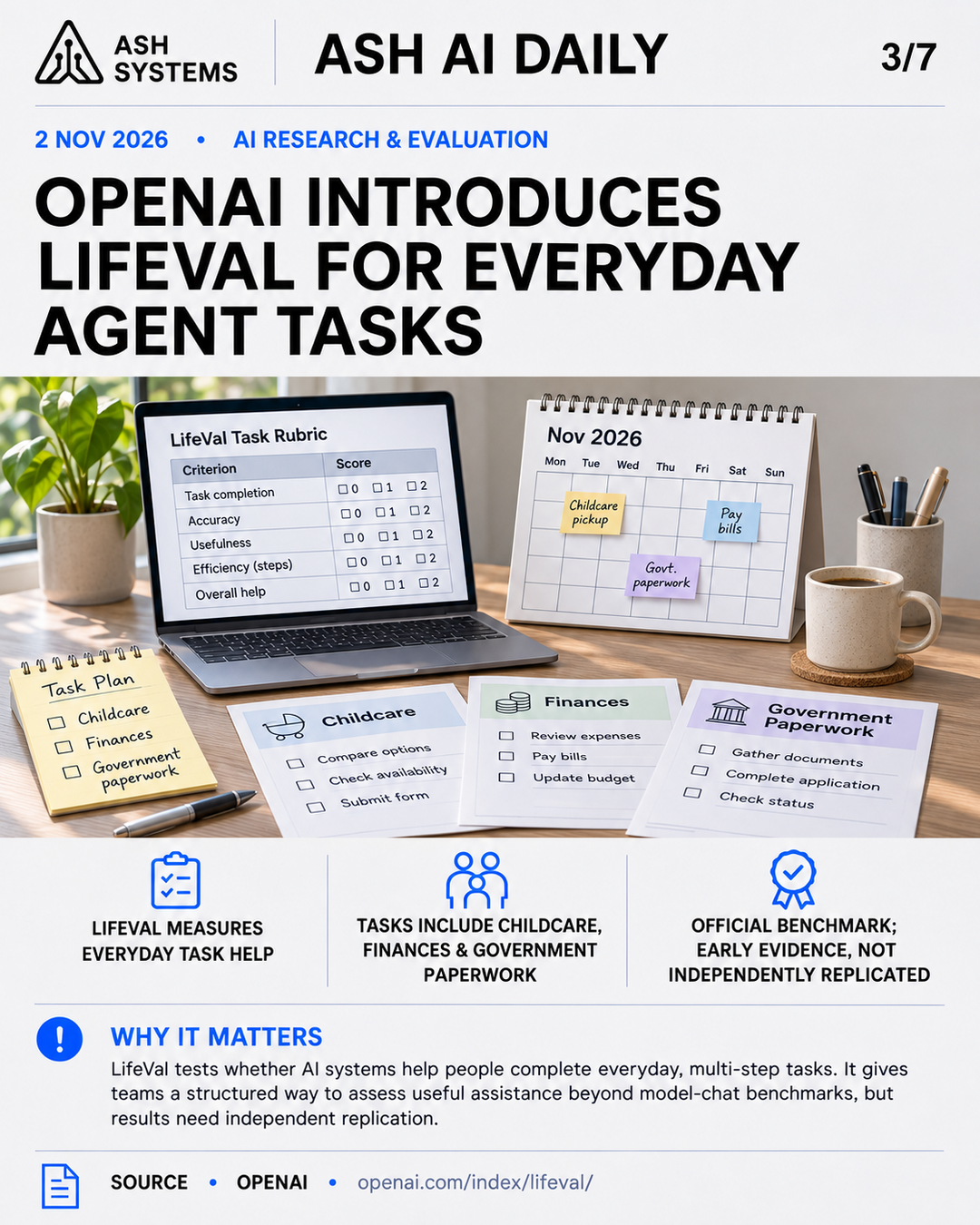
OpenAI introduced LifeVal, a benchmark for how well AI helps people complete everyday tasks, including finding childcare, managing finances and handling government paperwork. It is an official benchmark release, so its findings are early evaluation evidence rather than independently replicated proof of real-world performance.
Teams need tests that measure completed work, not only fluent answers. LifeVal offers a structured signal for evaluating practical agent assistance, while leaving room for independent validation on representative workflows.
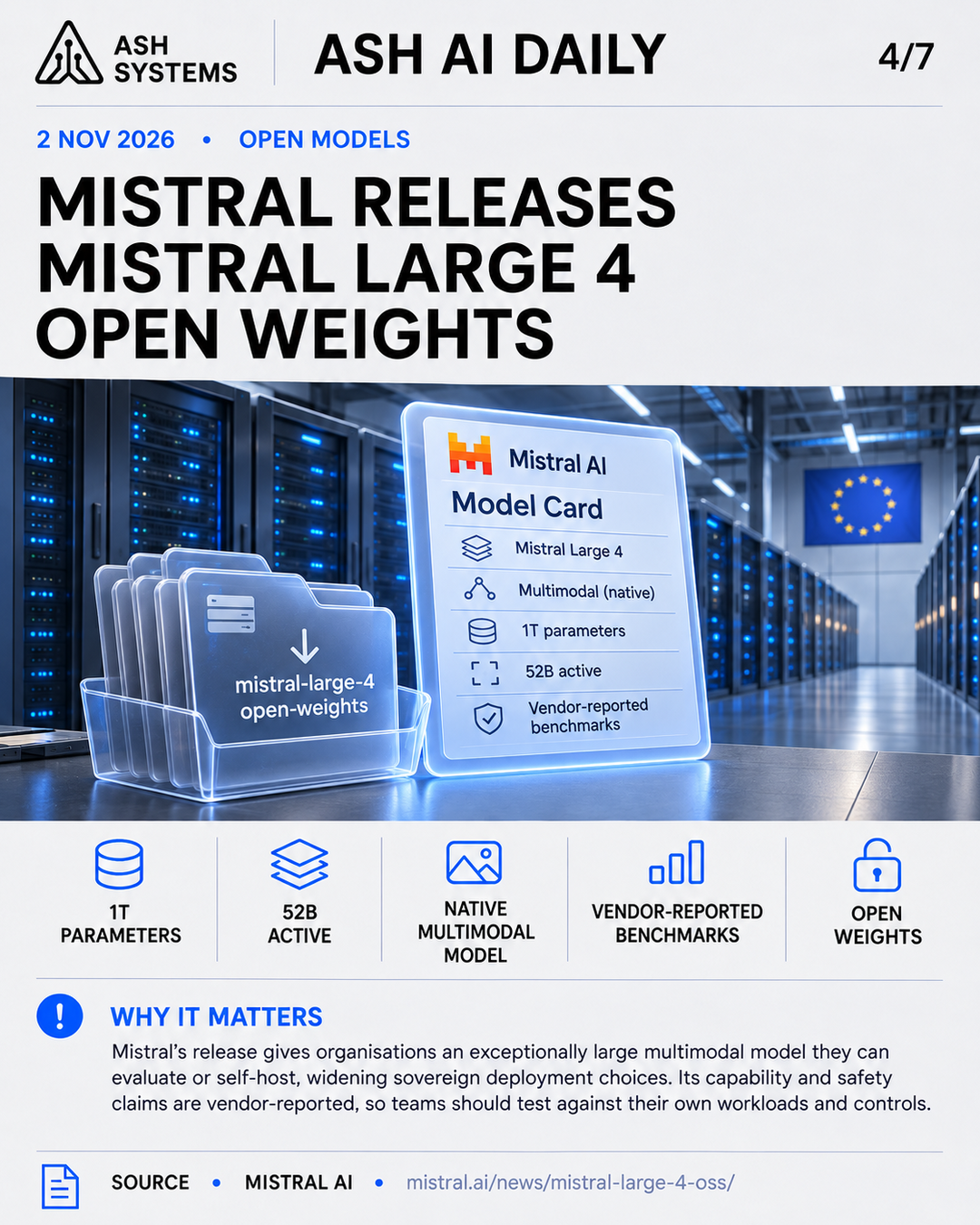
Mistral released open weights for Mistral Large 4, a native multimodal model with one trillion parameters and 52 billion active parameters. The company presents it for coding, agentic work and security-oriented use; performance and safety comparisons remain vendor-reported.
An open-weight frontier-scale model expands options for sovereign deployment and in-house evaluation. Organisations should validate capability, cost and safeguards on their own workloads before production use.
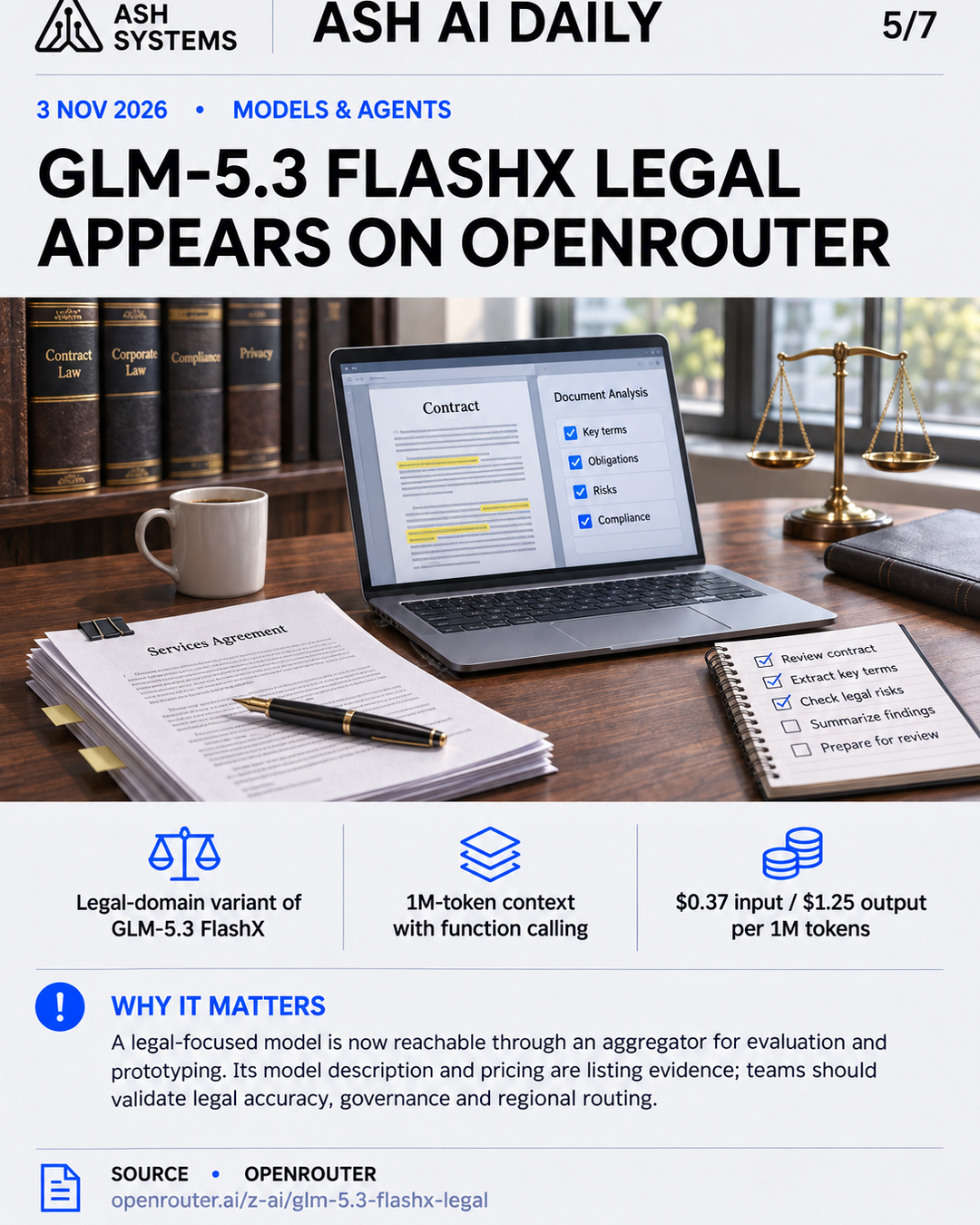
OpenRouter listed Z.ai’s GLM-5.3 FlashX Legal as an aggregator-accessible legal-focused model variant. The listing describes a one-million-token context window and publishes access and pricing details; this is a catalog listing and vendor description, not independent validation.
Aggregator availability can make specialised models easier to test in existing stacks. Legal teams should independently assess accuracy, confidentiality and jurisdictional fit before relying on it for client work.
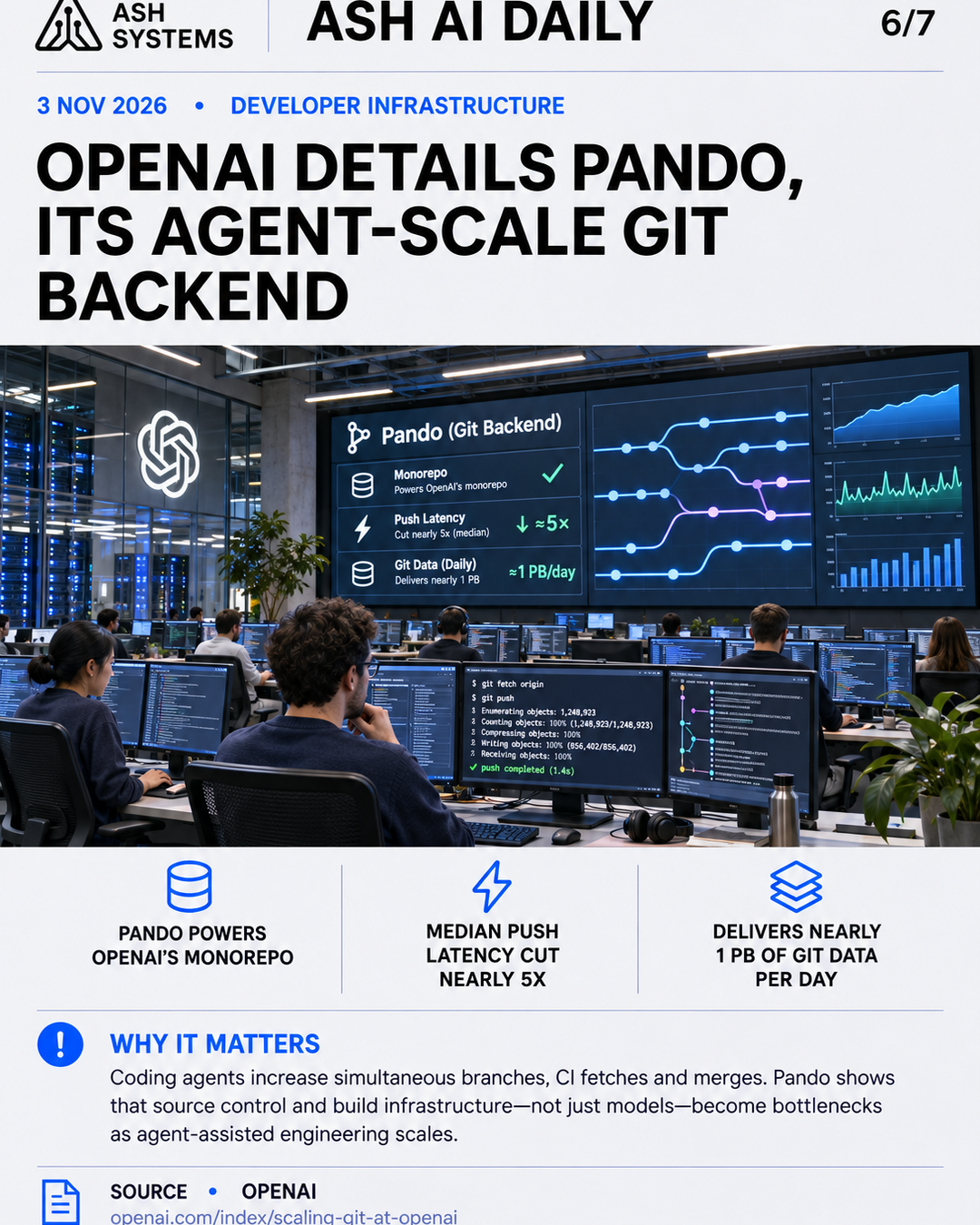
OpenAI described Pando, a Git backend now serving its production monorepo. The company says it was built to scale concurrent writes across many branches and maximise read throughput while preserving Git-protocol and client compatibility.
As coding agents increase concurrent repository activity, source control becomes a throughput constraint. Pando is a production-engineering signal that developer infrastructure must evolve alongside agent adoption.

This issue includes a closing visual to carry the next-day watchlist or wrap-up prompt alongside the main briefing.
Join the source-linked daily briefing and confirm once before delivery begins.
Ash AI Daily

A concise, source-linked read on the AI news that changes what teams can build.
You will receive a confirmation email before any daily issue is sent.