Issue 84Published October 29, 2026
Editor noteThis archived Ash AI Daily issue retains the delivered editorial briefing and final cards.
 Ash SystemsAI NewsletterDaily Issue
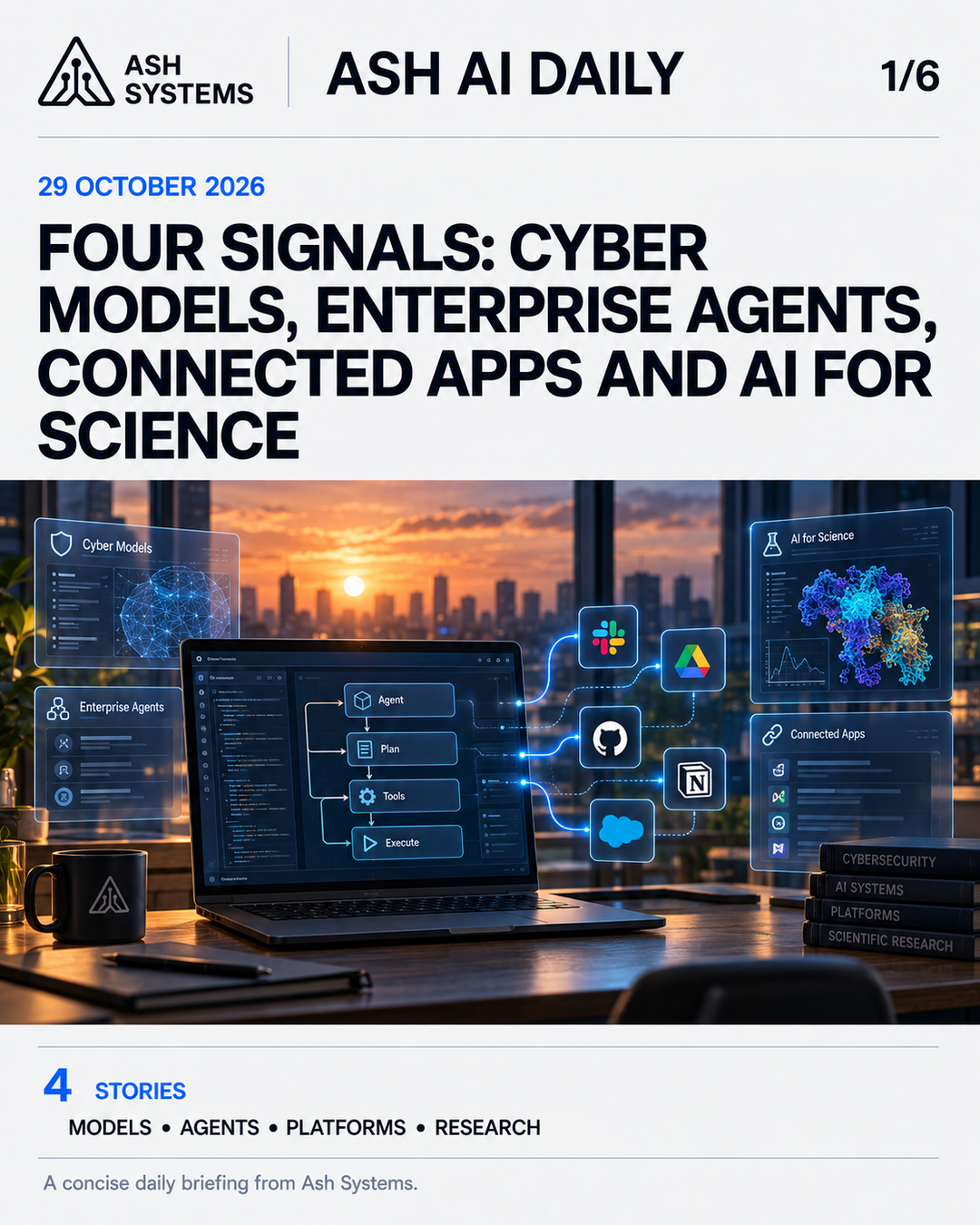
Four verified developments in cyber models, enterprise agents, connected-app infrastructure and AI-for-science adoption.
This archived Ash AI Daily issue retains the delivered editorial briefing and final cards.
Each story keeps its image, summary, impact, and linked sources in one uninterrupted reading flow.
This archived Ash AI Daily issue retains the delivered editorial briefing and final cards.
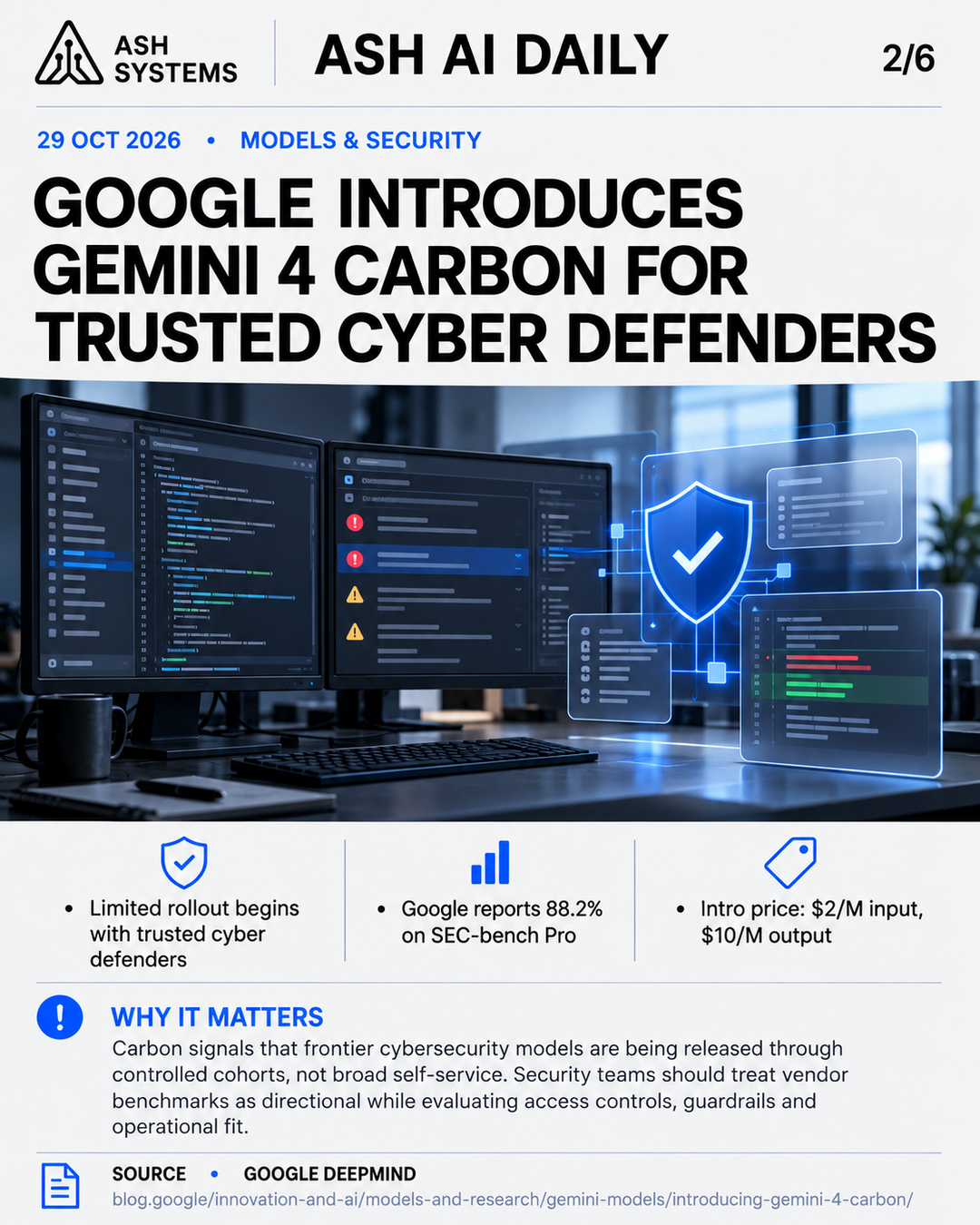
Google introduced Gemini 4 Carbon as a frontier model for long-horizon engineering and cybersecurity work. The company says initial access begins with a subset of trusted cyber defenders; it reports 88.2% on SEC-bench Pro and an introductory price of $2 per million input tokens and $10 per million output tokens.
Carbon signals that frontier cybersecurity capability is being released through controlled cohorts rather than broad self-service. Security teams should treat vendor benchmarks as directional while assessing access controls, guardrails and operational fit.
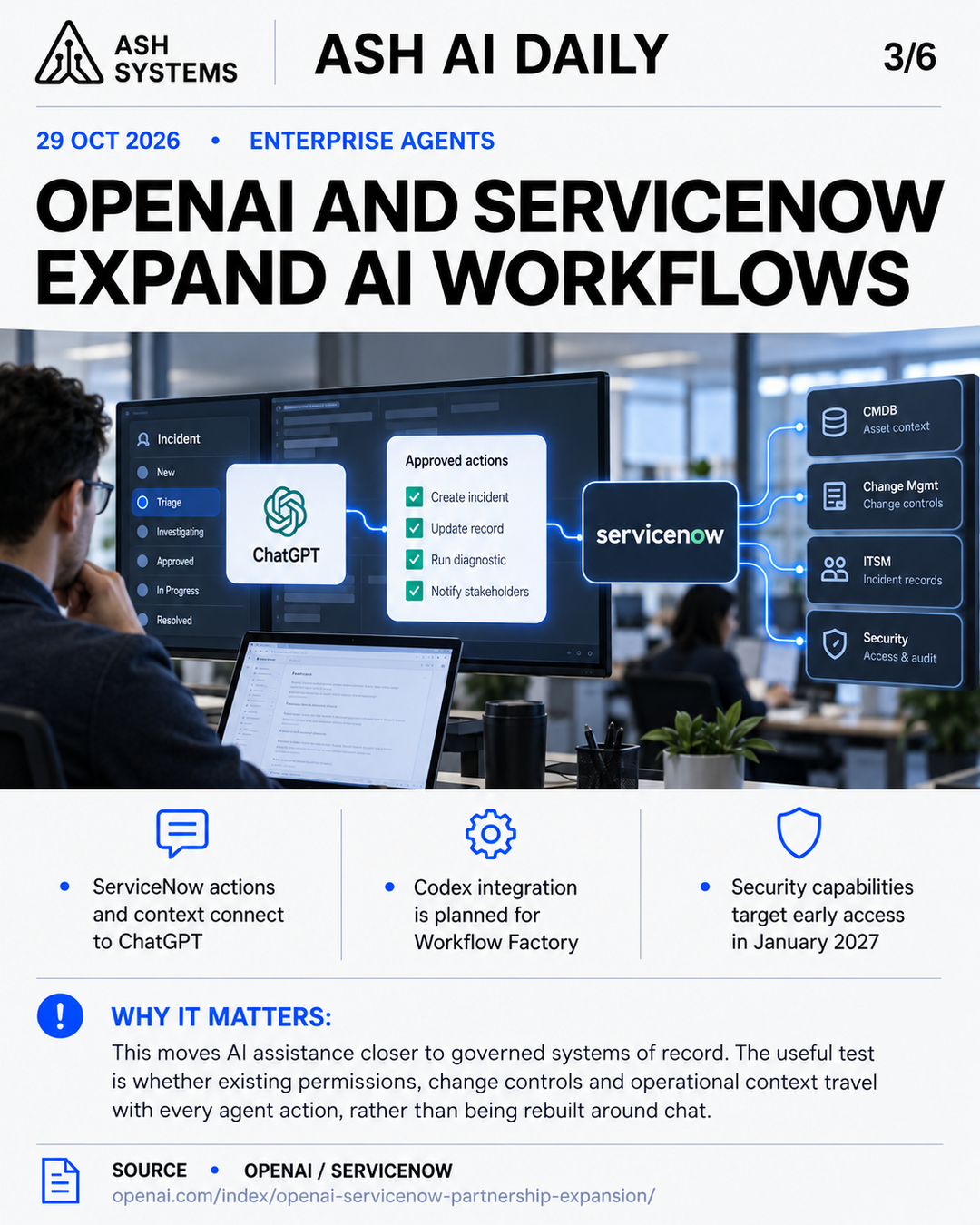
OpenAI and ServiceNow announced an expanded partnership that connects ServiceNow context and actions to ChatGPT, with a marketplace plugin available today. The companies also outlined planned Codex integration for AI Workflow Factory and security capabilities targeted for early access in January 2027.
The partnership moves AI assistance closer to governed systems of record. The test for enterprises is whether existing permissions, change controls and operational context travel with every agent action rather than being rebuilt around chat.
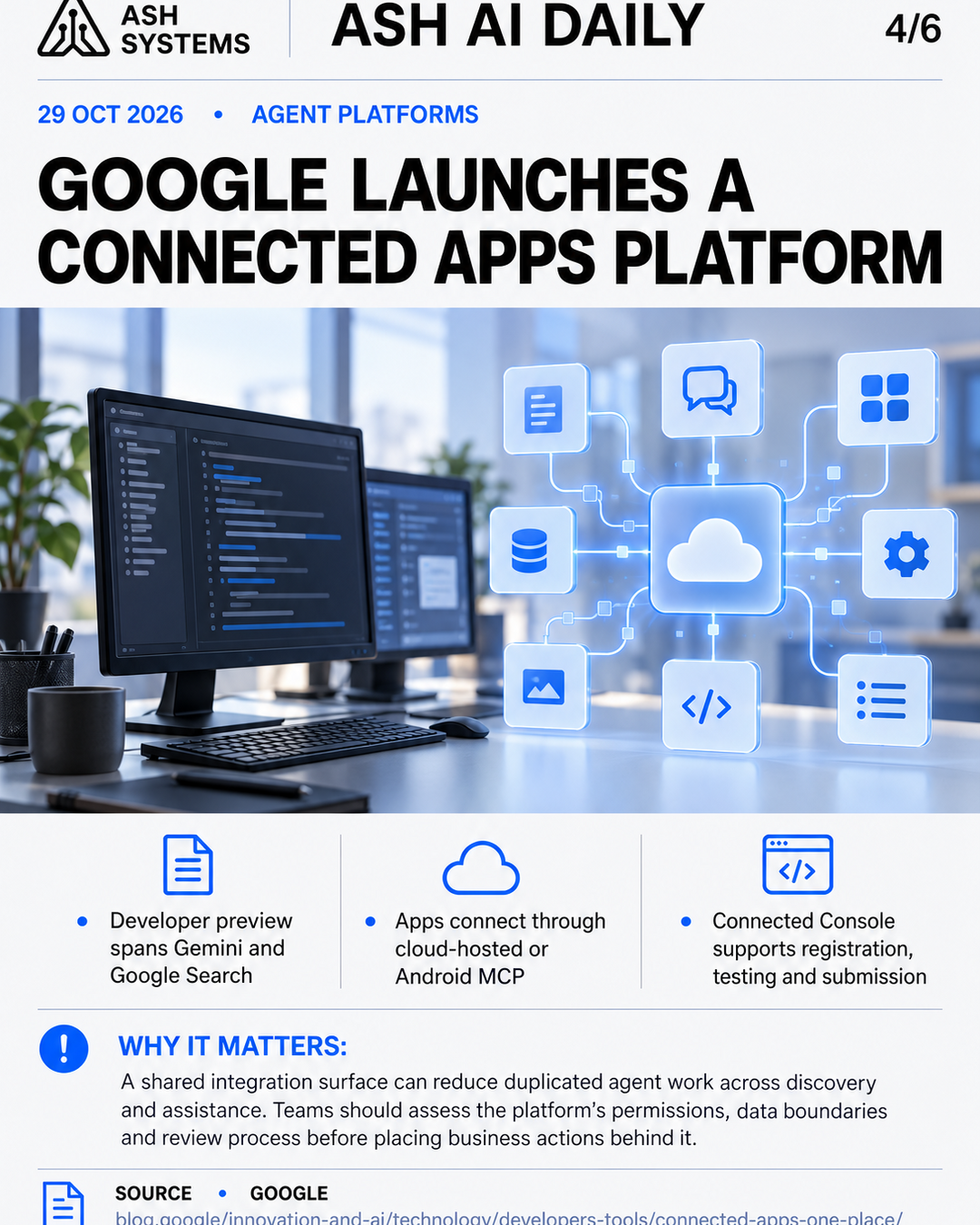
Google launched a developer preview of its Connected Apps Platform, a single place to build and manage apps for both Gemini and Search. Developers can integrate through cloud-hosted MCP servers or Android MCP using AppFunctions APIs, then register, test and submit through the Google Connected Console.
A shared integration surface could reduce duplicated agent work across discovery and assistance. Teams should assess permissions, data boundaries and the review process before placing business actions behind it.
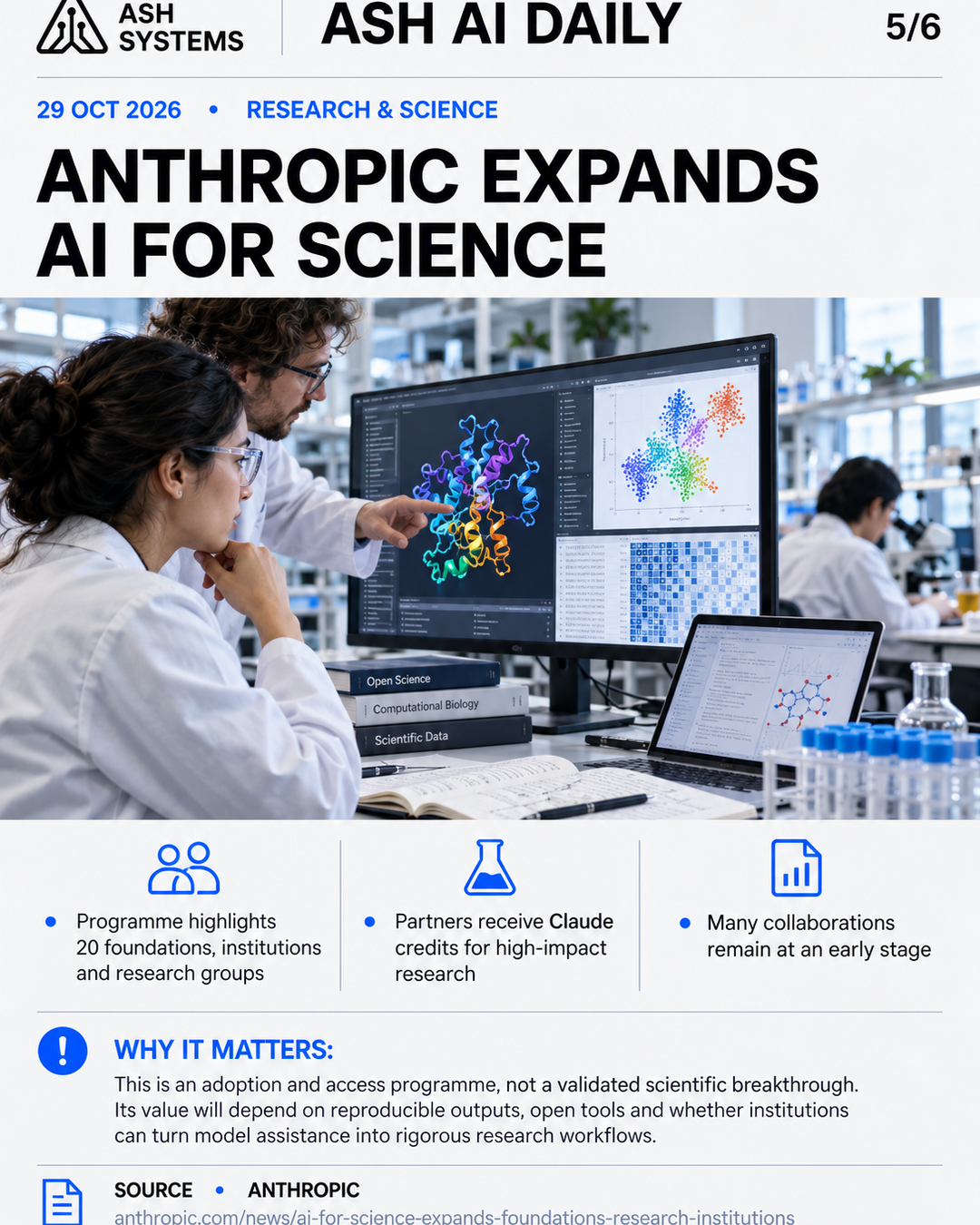
Anthropic highlighted 20 foundations, institutions and research groups in an expansion of its AI for Science programme, which supplies Claude credits for high-impact research. The company says the collaborations range across biology, medicine, physics, chemistry, climate science and mathematics, while many remain early stage.
This is an adoption and access programme, not a validated scientific breakthrough. Its value will depend on reproducible outputs, open tools and whether institutions can turn model assistance into rigorous research workflows.
This issue includes a closing visual to carry the next-day watchlist or wrap-up prompt alongside the main briefing.
Join the source-linked daily briefing and confirm once before delivery begins.
Ash AI Daily

A concise, source-linked read on the AI news that changes what teams can build.
You will receive a confirmation email before any daily issue is sent.