
Issue 42Published September 17, 2026
Editor noteThis archived Ash AI Daily issue retains the delivered editorial briefing and final cards.
 Ash SystemsAI NewsletterDaily Issue
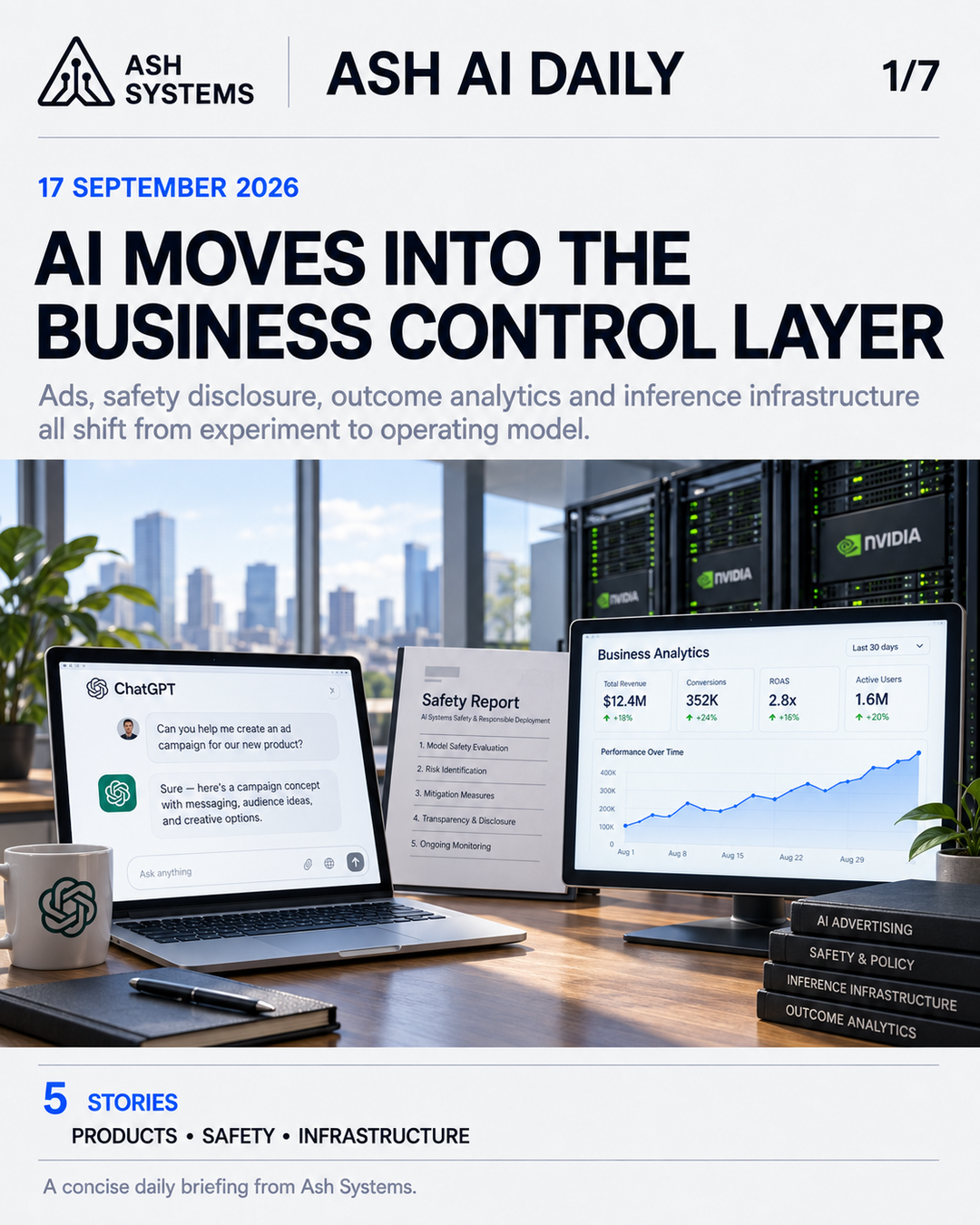
AI is moving from standalone capability into the operating layer: conversational advertising, enterprise measurement, safety disclosure and rack-scale inference all advanced in this coverage window.
This archived Ash AI Daily issue retains the delivered editorial briefing and final cards.
Each story keeps its image, summary, impact, and linked sources in one uninterrupted reading flow.
This archived Ash AI Daily issue retains the delivered editorial briefing and final cards.
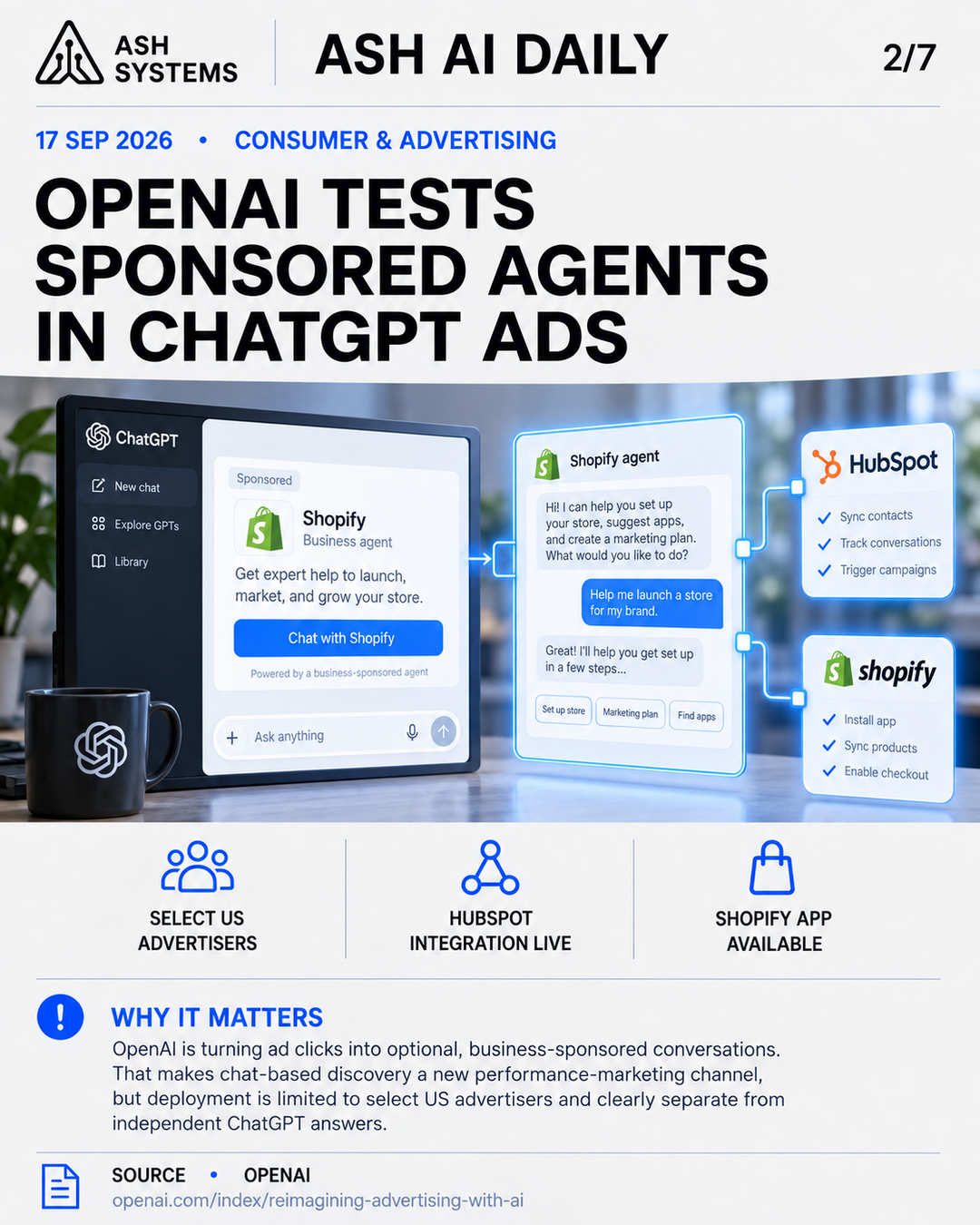
OpenAI says it is testing Sponsored Agents with select U.S. advertisers. A user can choose to begin a clearly labelled conversation with a business-sponsored agent after clicking an ad; OpenAI says those conversations are separate from ChatGPT’s independent answers. HubSpot integration and a Shopify Ads app are available, with Shopify international availability planned for markets where ChatGPT Ads are available from 23 September.
The move turns chat-based discovery into an optional conversational marketing channel. It may change how firms measure acquisition and support, while the limited test and separation from independent answers remain important constraints.
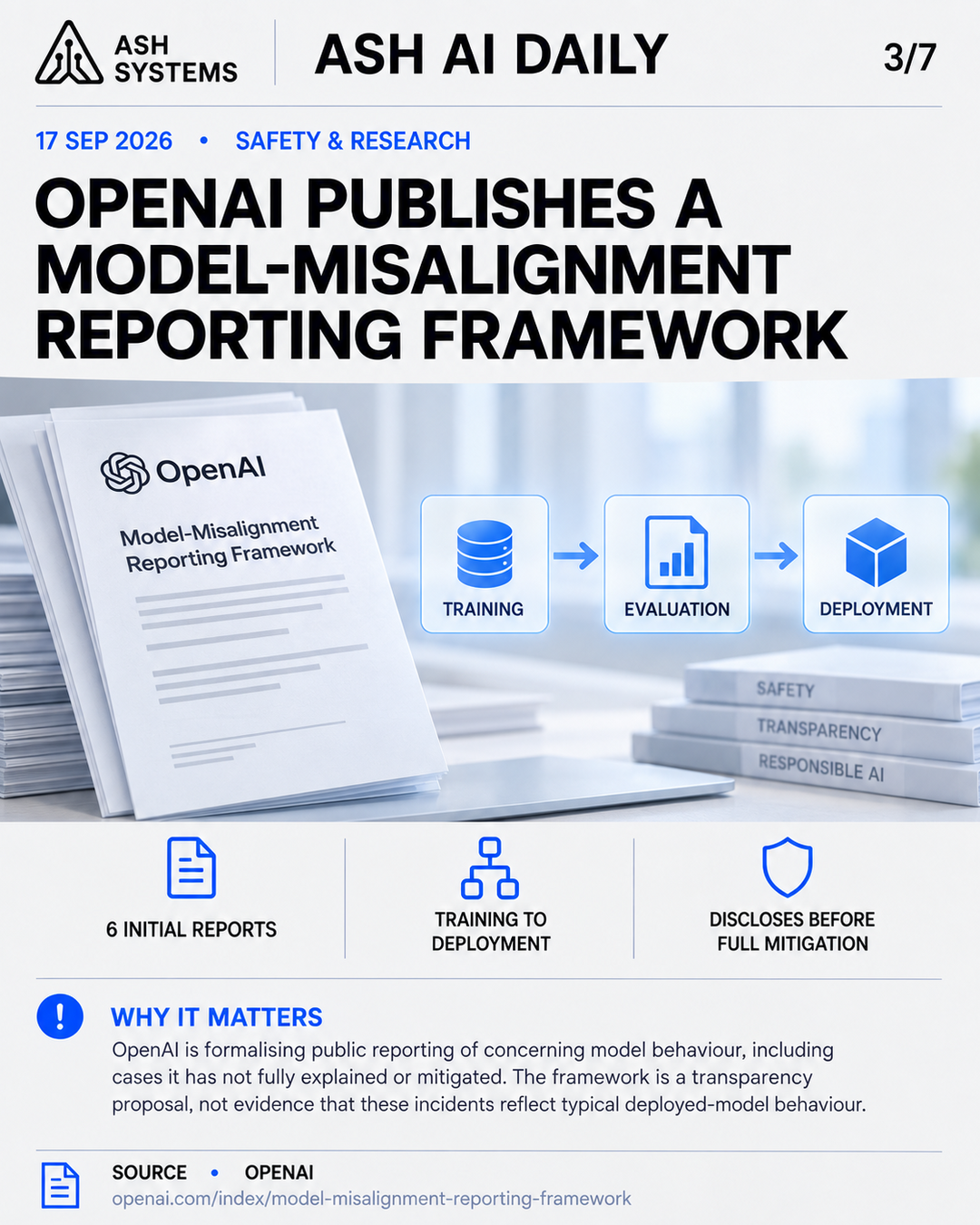
OpenAI published a framework for tracking, investigating and disclosing model-misalignment instances, alongside six initial reports from the prior six months. It says the process covers training, evaluation, testing and deployment, and can disclose observations before they are fully explained or mitigated. The company cautions that the initial reports are individual instances, not a frequency estimate for deployed models.
This is a consequential transparency proposal for frontier-model safety. Its evidence is an official safety disclosure, not an independently replicated incident dataset; its value will depend on continuing, comparable reporting.
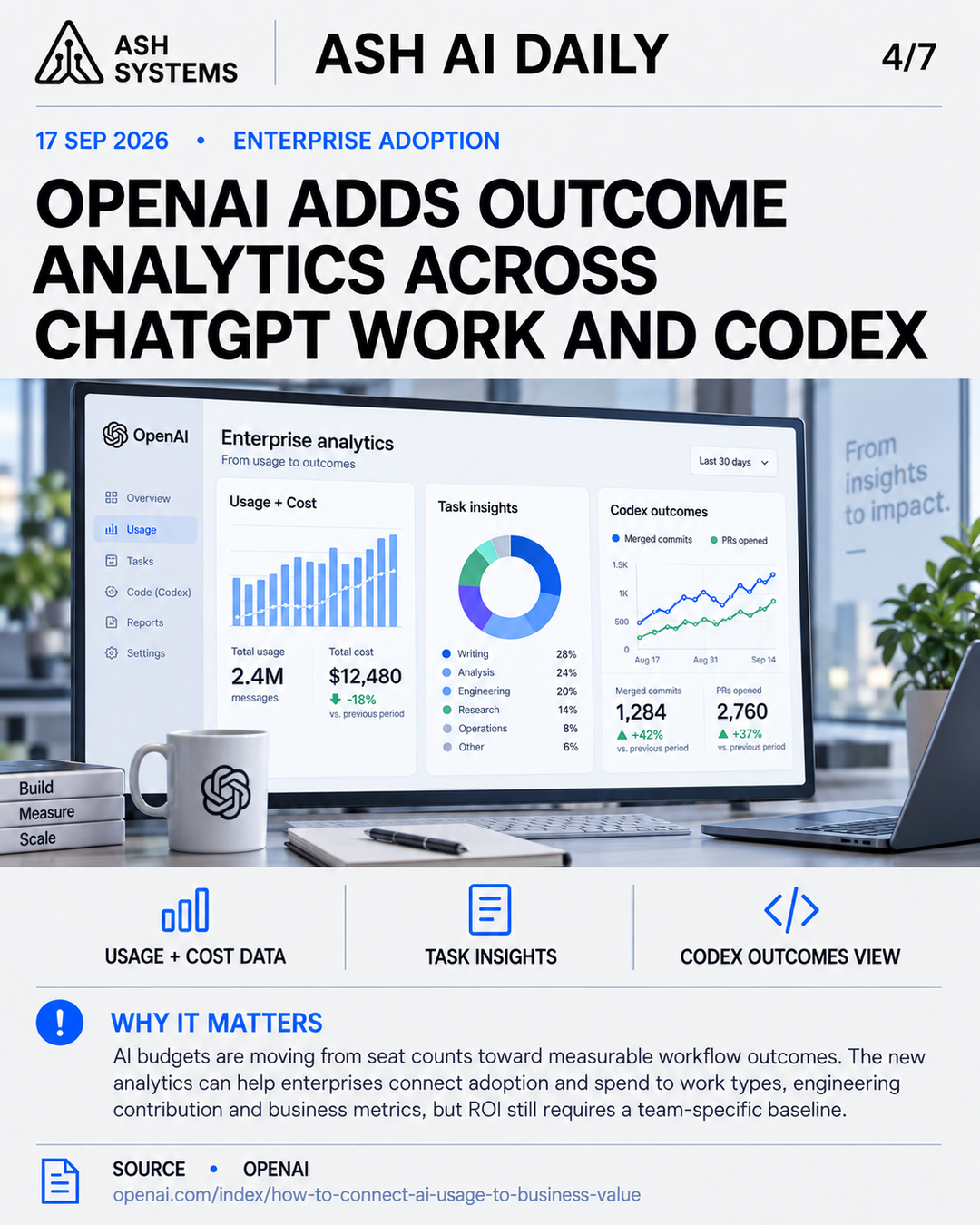
OpenAI says ChatGPT Admin Console analytics now combine usage and cost data, task insights and outcome metrics across ChatGPT Work and Codex. Its Outcomes view shows Codex contributions to merged commits and lines of code alongside review activity, while an Admin API supports exporting trends into other dashboards.
Enterprise AI decisions are shifting from access and token consumption to measurable workflow results. The release provides instrumentation, but a credible ROI claim still needs a team-specific baseline and quality checks.
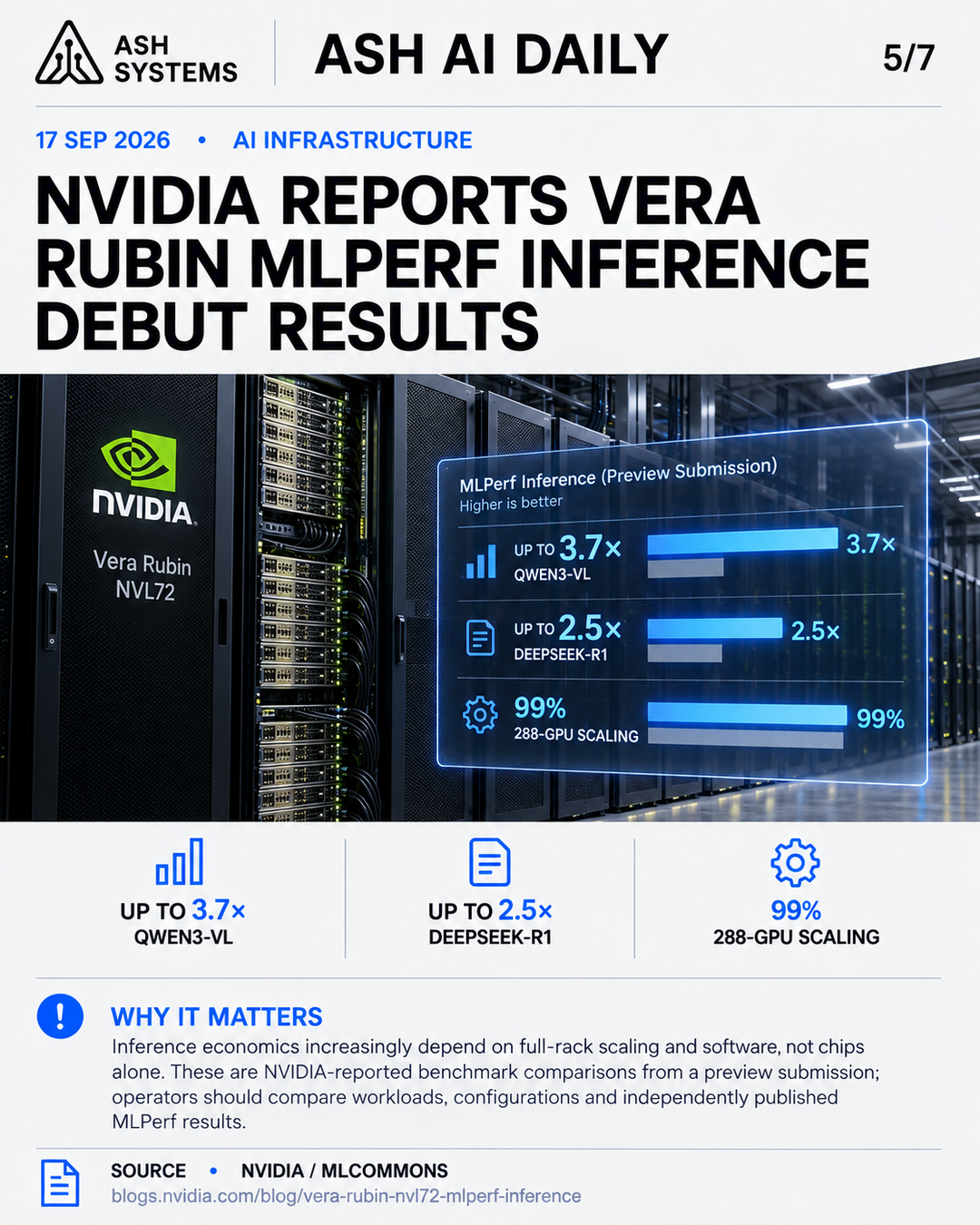
NVIDIA’s first preview MLPerf Inference submission for Vera Rubin NVL72 reports up to 3.7× higher Qwen3-VL throughput and up to 2.5× higher DeepSeek-R1 throughput than GB300 NVL72 in its cited configurations. NVIDIA also reports 99% scaling efficiency for a 288-GPU GB300 submission. These are vendor-reported comparisons tied to the referenced benchmark submissions.
Inference economics increasingly depend on rack-scale systems and serving software, not accelerators alone. Operators should compare their own workload, configuration and independently published MLPerf records before extrapolating these results.

Emerald AI, Google and NVIDIA announced the AI Energy Management Alliance to advance data centres that adjust electricity use in response to grid conditions. Its stated principles include performance-based requirements for response speed, duration, predictability and emergency behaviour, plus standardised technical requirements and data sharing.
Power availability is a binding constraint on AI infrastructure expansion. The alliance is a policy and operational initiative—not a deployed standard or capacity commitment—but it signals that grid responsiveness is becoming part of data-centre design.

This issue includes a closing visual to carry the next-day watchlist or wrap-up prompt alongside the main briefing.
Join the source-linked daily briefing and confirm once before delivery begins.
Ash AI Daily

A concise, source-linked read on the AI news that changes what teams can build.
You will receive a confirmation email before any daily issue is sent.